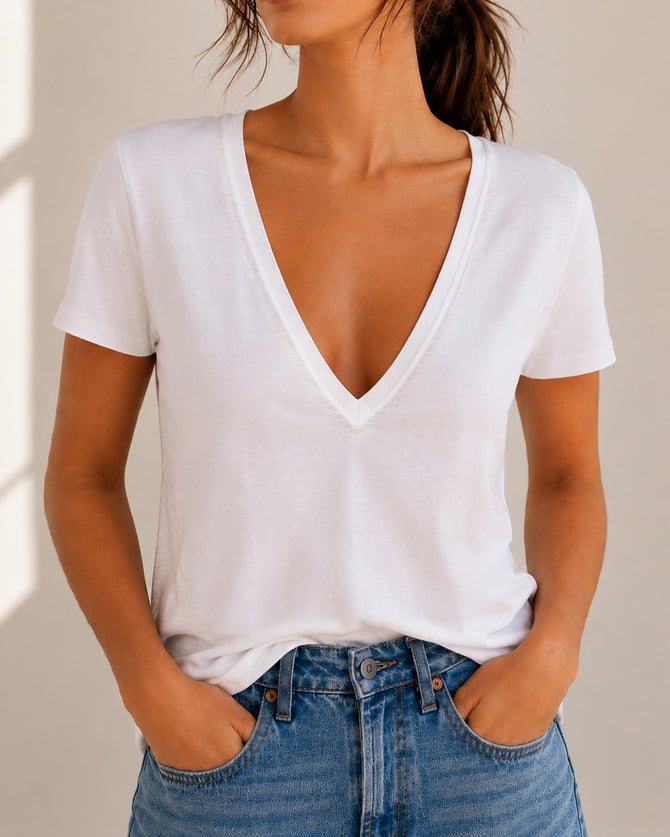
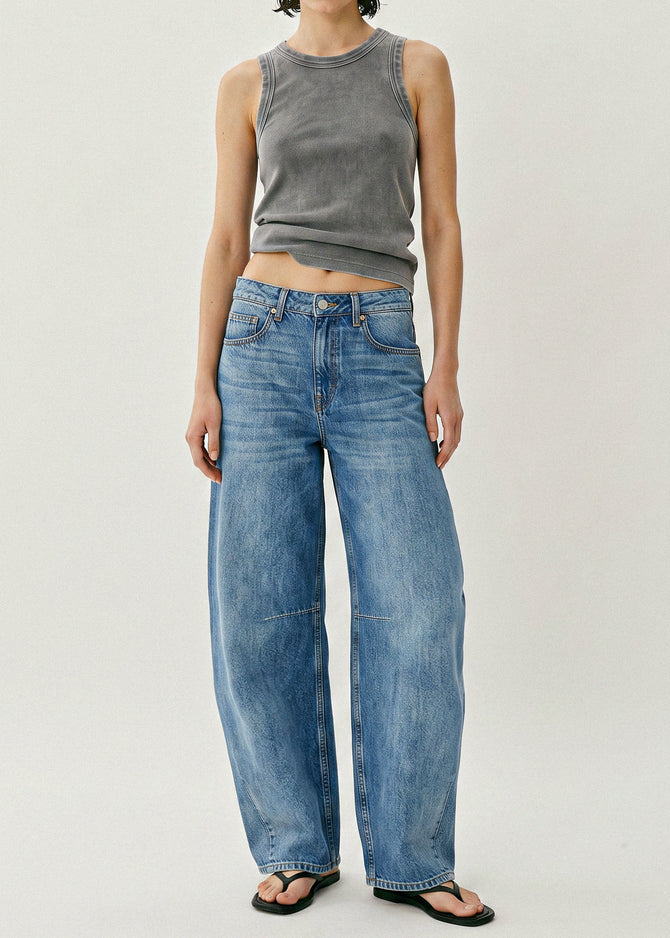


A high rise changes where the outfit begins; a mid rise changes how much space is left between the waistband and the natural waist.
The right rise is the one that stays level, feels comfortable when you sit, and works with the tops you actually wear. High-rise jeans usually sit at or near the natural waist, creating a more anchored feel and a longer visual line below the waistband. Mid-rise jeans sit lower, often feel less enclosing through the upper torso, and can make untucked styling easier. Neither is inherently more flattering; fit and comfort decide.
What Is the Difference Between High-Rise and Mid-Rise Jeans?
Rise is the vertical distance from the crotch seam to the top edge of the front waistband. It tells you where a pair of jeans is designed to sit on the torso. A higher number usually places the waistband closer to the natural waist; a lower number places it nearer the high hip.
Category names are useful, but they are not perfectly standardized. One brand may call an 10-inch rise “mid,” while another uses the same measurement for a higher-sitting style. Size, pattern grading, waistband shape, and the wearer’s torso length can also change where that measurement lands. The most reliable comparison is the listed front-rise measurement in your size—not the category name alone.
High rise, in practical terms
A high rise is designed to reach the natural waist or close to it. It tends to feel anchored through the waist and gives tucked shirts, cropped knits, and shorter jackets a clear visual starting point. Because there is more denim between crotch and waistband, the cut has to match your torso length: too short and it can pull at the crotch; too tall and the waistband may press into the ribs when seated.
Mid rise, in practical terms
A mid rise sits below the natural waist, typically around the upper hip. It leaves more visible torso above the waistband and often pairs easily with longer or untucked tops. A good mid rise should still stay secure without sliding down. If it needs constant pulling up, the issue may be the waist-to-hip fit, fabric recovery, or size—not simply the rise category.

How to Choose the Right Rise
Start with a pair you already like. Lay it flat, smooth the front, and measure from the crotch seam to the top of the front waistband. That number gives you a useful baseline for shopping. Our jeans size chart guide explains how to compare that garment measurement with the rest of a product’s specifications.
Choose high rise when you want
- A waistband that meets the natural waist and feels securely anchored.
- A defined break between a tucked top and the jeans.
- More visual length from waistband to hem.
- Extra front and back coverage—provided the rise is not too tall for your torso.
Choose mid rise when you want
- A waistband that sits below the natural waist.
- Less denim through the upper torso.
- An easy proportion with longer, half-tucked, or untucked tops.
- A familiar everyday placement that does not reach the ribs when seated.
These are preferences, not rules. A well-cut mid rise can feel more secure than a poorly matched high rise, and a high rise can be exceptionally comfortable when its waistband contour and front rise suit you.
The Sitting Test Matters More Than the Mirror
Standing in front of a mirror only shows part of the fit. Sit in a normal chair, bend to tie a shoe, take a few long steps, and raise one knee. The waistband should stay generally level without hard digging, folding, or opening dramatically at the back. The fly should lie flat, and the crotch should not pull into sharp horizontal “smile” lines.
Some creasing is normal—denim has to bend with the body. What matters is whether the pressure feels evenly distributed. A waistband that looks smooth but becomes uncomfortable within minutes is not the right rise or shape for all-day wear.

Do Not Confuse Rise With Leg Shape or Stretch
Rise is only one part of a jean. A high-rise curved leg and a mid-rise flare will create different overall proportions even before fabric is considered. Rigid cotton feels more structured and changes gradually with wear; stretch denim usually feels easier on day one and recovers differently. When comparing two pairs, separate the questions: Do I like where the waistband sits? Do I like how the leg falls? Do I like how the fabric feels?
For example, NOEND’s Kallie Relaxed Curve in Baltimore has a 13-inch front rise, a sculpted curved leg, and rigid 100% cotton denim. The Donna 90’s Mid Rise Flare in Everwood has a 10-inch front rise, a fitted-to-flared line, and 1% Lycra. They show the visual difference between higher and lower waistband placement, but they are not a controlled comparison: leg shape and fabric also affect how each pair feels.
A Simple Three-Step Decision
- Measure: record the front rise of jeans you already enjoy wearing.
- Style: try the tops and shoes you plan to wear, rather than judging the jeans in isolation.
- Move: sit, bend, walk, and check whether the waistband stays comfortable and level.
If two rises pass all three tests, keep both in rotation. High rise and mid rise are not competing answers; they are different tools for proportion, coverage, and comfort.
Frequently Asked Questions
Is a 10-inch rise high or mid rise?
Often it is described as mid rise, but labels vary by brand and size. Use the product’s actual front-rise measurement and compare it with a pair you own.
Should high-rise jeans sit above the belly button?
Not necessarily. They commonly sit near the natural waist, but exactly where that falls depends on torso length and the jean’s pattern. Comfort and a level waistband matter more than a fixed landmark.
Why do high-rise jeans gap at the back?
Back gaping usually indicates that the waistband contour or waist-to-hip proportion does not match the wearer. Sizing down may create pulling elsewhere, so a different cut is often a better solution.
Can mid-rise jeans still make legs look long?
Yes. A long inseam, continuous wash, full-length hem, and shoe choice can all extend the leg line. Rise contributes to proportion, but it does not determine the result alone.
The Bottom Line
Choose high rise for a waistband that meets the natural waist and creates a more defined, anchored proportion. Choose mid rise for a lower placement and a little more openness through the upper torso. The better pair is the one that stays put, remains comfortable while seated, and works naturally with your wardrobe.
If you want to compare the two approaches in real denim, explore the structured Kallie Relaxed Curve or the easy-stretch Donna 90’s Mid Rise Flare. For another fit check, see how straight-leg jeans should really fit.