

Jeans usually bunch at the crotch because the rise, hip or thigh shape does not match your proportions, the size is off, or rigid denim has not yet settled through movement. A few folds while sitting are normal. Persistent whiskers, a dropping crotch, a pulled fly or fabric that collapses when you stand point to a fit mismatch rather than ordinary wear.
First, decide whether the bunching is actually a problem
Denim has to fold when the body bends. Sitting, climbing stairs and taking a long stride temporarily compress fabric at the front rise, so a few soft lines are expected. The useful question is not whether the jeans crease at all; it is whether the folds remain when you return to a relaxed standing position.
Put the jeans on at their intended rise, fasten them without pulling the waistband higher than it naturally sits, and stand with your feet hip-width apart. If the fly lies reasonably flat, the waistband stays level and the folds release when you move, the jeans may be behaving normally.
Fit clues that deserve a closer look
- Horizontal lines that radiate strongly from the fly or upper thigh.
- A front rise that feels pulled upward or presses into the body.
- A low pocket of fabric that remains below the fly while standing.
- A fly that bows, twists or will not lie flat.
- A waistband that tips forward or drops lower in front.
- Side seams that swing toward the front instead of hanging vertically.
The most common causes of crotch bunching
The front rise is too short
If the distance from the crotch seam to the waistband is shorter than your body needs, the jeans may pull upward and create tight horizontal whiskers. You may also feel pressure when sitting. Sizing up can add some room, but it also changes the waist, hip and leg. A style with a longer rise is often the cleaner solution.
The rise is too long or the jeans are sitting too low
Extra vertical length can collapse below the fly and create a soft pouch or stacked folds. Before deciding the pattern is wrong, settle the waistband where it was designed to sit. A high-rise jean worn deliberately low may not keep its intended front shape. If the waistband is correctly placed and excess fabric still hangs at the crotch, the rise may simply be too long for you.
The hip or thigh is too tight
When the upper leg cannot fall freely, the fabric searches for space and pulls toward the crotch. Diagonal drag lines from the inner thigh or fly often suggest tension below the waistband. A larger size may help, but a cut with more room through the hip and upper thigh can solve the issue without making the waist unnecessarily loose.
The waist or seat is too loose
A loose waistband lets the jeans slide downward. As the crotch drops, fabric collects below the fly even when the rise measurement looked suitable on paper. Check the back as well: excess fabric at the seat and a dipping waistband can be part of the same problem.
Rigid denim is still settling
Fresh 100% cotton denim can hold sharper folds than broken-in fabric. Light creasing may soften as the jeans move with you, but wear cannot correct an incompatible rise or remove substantial excess fabric. Do not rely on break-in to fix pulling, pain or a fly that is visibly distorted.

Read the direction of the wrinkles
Wrinkles are useful because they show where the fabric is moving. They are clues, not a perfect diagnostic system, so read them alongside pressure, waistband position and the way the jeans look from the side.
Tight horizontal whiskers
Strong lines pulling outward from the fly usually indicate tension across the front hip, rise or upper thigh. Try the next size and a roomier cut. If the larger size fixes the front but leaves a wide gap at the waist, the original silhouette may not match your proportions.
A soft vertical collapse below the fly
This generally points toward excess rise length, a waistband sitting below its intended position or a size that is too generous through the front. Compare the standing view with the side view before altering anything.
Diagonal lines from the inner thigh
Diagonal drag lines often appear when the thigh or hip is pulling the fabric inward. They may lessen in a straighter, relaxed or curved fit that provides more room before the leg falls away from the body.
Use a three-position test
A fitting-room mirror shows only one moment. Test the jeans standing, sitting and walking, then notice which folds disappear and which remain.

Standing
The waistband should sit level, the fly should close without bowing and the crotch should neither press upward nor hang in a pouch. A small amount of relaxed texture is normal, especially in rigid denim.
Sitting
Temporary folds are expected. Focus on comfort: you should be able to sit upright and breathe normally without the waistband cutting in or the front rise creating concentrated pressure.
Walking
Take several normal steps. The jeans should move without forcing you to shorten your stride, and most movement wrinkles should release when you stop. A seam that twists or a crotch that repeatedly drops suggests more than ordinary creasing.
Which fixes are worth trying?
Reset the waistband
Before changing size, place the waistband at the rise intended by the design and smooth the side seams into position. This simple reset can reveal whether the jeans were merely sitting too low or being pulled too high.
Compare a neighboring size
Try one size up and one size down when possible, but compare the entire garment. The goal is not simply fewer folds; it is a balanced waist, comfortable hip and thigh, stable fly and natural movement. Use the garment measurements rather than assuming the same tagged size will fit identically across cuts. The guide How to Read a Jeans Size Chart explains how to compare those measurements with a pair you already own.
Change the rise or silhouette
If adjacent sizes trade one problem for another, try a different pattern. A longer or shorter rise can change where the crotch seam meets the body, while a relaxed hip and thigh can reduce tension without over-sizing the waistband. For a closer comparison of waistband position, see High-Rise vs. Mid-Rise Jeans: Which Rise Is Right for You?.
Ask a tailor before removing fabric
Taking in a loose waistband is a common alteration. Changing the front rise, crotch curve or upper-thigh balance is more structural and can affect the fly, pockets and leg alignment. Ask an experienced denim tailor to pin and assess the jeans while you stand and sit before approving the work. For inexpensive jeans, a different cut may be more practical than extensive reconstruction.
Recommended NOEND denim to compare
The point of comparing styles is not to find one universal fit. It is to see how rise and room through the hip change the way fabric falls.
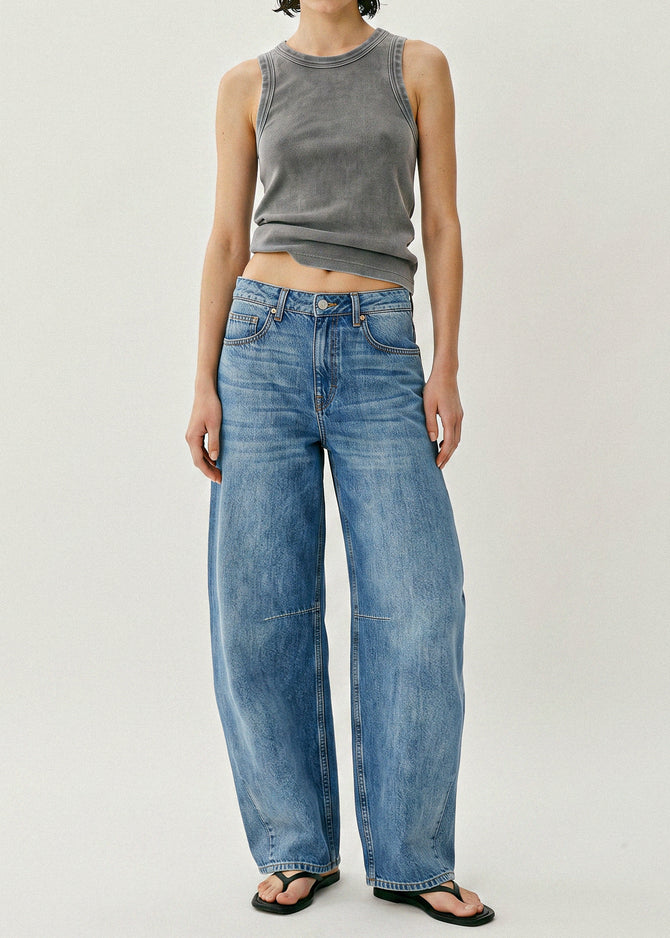
The Kallie Relaxed Curve in Madison has a listed 12.5-inch front rise, a loose fit through the hips and a wide, softly curved leg. Its 100% cotton rigid denim makes it a useful high-rise reference when you want more room through the upper leg without losing structure.
The Evelyn Regular Fit Jeans in New York City offers a different comparison: an 11-inch front rise and a straighter line through the thigh and calf in 100% cotton denim. The product page notes that it runs generous and suggests sizing down for a more tailored fit, so check the garment measurements rather than choosing by tag alone.
Frequently asked questions
Does crotch bunching always mean jeans are too big?
No. Excess fabric can mean the rise is too long or the waist is loose, but tight hip, thigh or rise measurements can also create wrinkles by pulling fabric toward the crotch. The direction of the lines and the movement test provide better clues than the amount of fabric alone.
Will washing fix bunching at the crotch?
Washing may soften temporary creases or change how rigid denim feels, but it cannot reliably correct a pattern mismatch. Follow the care label and do not use heat as a fit-adjustment strategy; shrinkage can be uneven and may make tension worse.
Can a tailor fix a saggy crotch?
Sometimes, but it depends on where the excess originates and how the jeans are constructed. Waist adjustments are usually simpler than reshaping the rise or crotch curve. An in-person assessment is the safest way to judge whether the result is worth the cost.
How much wrinkling is normal in rigid denim?
Some creasing during sitting and walking is normal because rigid cotton must bend with the body. It becomes a fit concern when folds stay pronounced while standing, the fly distorts, the waistband will not remain level or movement feels restricted.
The practical takeaway
Do not diagnose crotch bunching from one front-facing photo. Set the waistband correctly, read the wrinkle direction, check the side and back, and repeat the test while sitting and walking. If the folds remain, compare a neighboring size and a different rise or hip shape before assuming the denim simply needs time to break in.
Explore the fits
If you want to compare two distinct starting points, view the high-rise, roomy Kallie Relaxed Curve in Madison beside the mid-rise, straighter Evelyn Regular Fit Jeans in New York City. Use each product’s listed rise and measurements as a reference, then choose the pattern that stays balanced when you stand, sit and walk.