

Wear a button-down tucked when its length and fabric sit smoothly inside the jeans, and untucked when the hem falls cleanly without needing constant adjustment. A front tuck offers a middle option if the shirt has enough length to stay in place. Start with the shirt’s cut, the waistband space and the result you want, rather than treating one approach as universally correct.
Let shirt length guide the first decision
A long shirt tail gives you more fabric to secure inside the waistband, but that fabric also needs somewhere to sit. A shorter shirt can look easy untucked yet pull free when you raise your arms. Neither is automatically a problem; it depends on how you intend to wear the shirt.
Proper Cloth’s shirt-length guide distinguishes between length intended for tucking and length intended for untucked wear. That is the useful principle here. You do not need to transfer a fixed measurement from another person or shirt category to your own outfit.
Put the shirt on with the jeans before deciding. Look at the front, side and back hems. A curved tail may hang lower at the back, while a straighter hem can create a more even line. Both can be worn out; the question is whether you like the amount and shape of fabric showing.
Choose a full tuck for a clear waistband
A full tuck puts the shirt hem inside the jeans all the way around. It can make the waistband and pockets easier to read, especially when the shirt has enough length to stay put. Start with the shirt smooth, tuck it loosely, then fasten the jeans without compressing a large bundle of fabric.
Lift your arms gently and let the shirt settle. A small amount of ease above the waistband helps the shirt move with you. Pulling it completely taut can make it feel restrictive or encourage it to work loose the moment you sit down.
If the waistband becomes uncomfortable only after tucking, compare a lighter or less voluminous shirt. Do not assume the jeans need a different size solely to hold several layers of extra fabric. Check that the shirt is spread evenly rather than gathered in one thick fold at the side.

Use a front tuck when the sides should stay loose
A front tuck anchors a small section of the shirt while the sides and back remain outside. Begin with just the fabric near the front opening, then let the rest fall naturally. The aim is a soft transition, not a tightly wound knot pushed behind the jeans button.
This option works best when the shirt can reach the waistband without pulling the back hem forward. If the side seams twist sharply or the tuck comes free whenever you move, try less fabric, a full tuck or an untucked finish. The technique should suit the shirt’s construction.
Check the button line
Look at the shirt’s front opening after tucking. If it bends abruptly toward one hip or forms a strained diagonal, release some fabric and let it settle again. A slightly relaxed, imperfect tuck can look natural; tension is not required to make it stay in place.
Leave it untucked when the hem already works
An untucked shirt can be the simplest choice when its length and volume suit the jeans. Let the tails fall, then check whether they catch on the back pockets or bunch against the waistband. Smooth them once and move normally rather than constantly arranging the shirt for a mirror pose.
With a roomy shirt and a loose straight jean, you may prefer to roll the sleeves or open the collar slightly to introduce a little variation. Those are optional styling details. You do not have to expose the waistband for the outfit to feel considered.
Try all three options with the same shoes. That keeps the comparison focused on the shirt rather than changing the entire outfit at once. A quick side view is often more informative than studying only the front.

Start with jeans that do not need the tuck to fit
The waistband should work before the shirt goes inside it. If the jeans keep slipping or feel restrictive with a thin top, deal with that fit question separately. A tuck can change the appearance of the waist, but it is not a reliable substitute for a comfortable size and cut.
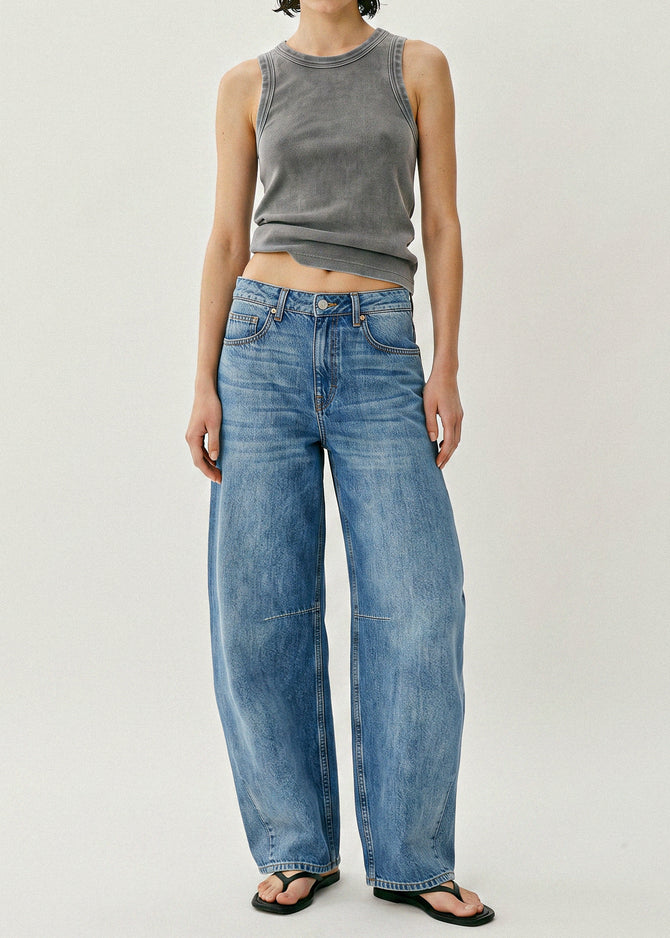
Miley Straight in Charleston is a loose-fit, 100% cotton option for trying these variations. Its relaxed straight leg gives the shirt a consistent base while you compare a fully visible waistband, a small front tuck and a free-hanging hem. The shirt choice remains the variable.
Questions about button-down shirts and jeans
Do high-rise jeans always need a tucked shirt?
No. A higher waistband can be shown or covered. Choose according to the shirt’s length and the outline you prefer.
Why does my shirt keep coming untucked?
It may be too short for that tuck, or movement may be pulling against the fabric. Check length and ease before adding more tension at the waistband.
Can a thick shirt be tucked into jeans?
Sometimes, if there is sufficient comfortable room. If the fabric forms a bulky ridge, an untucked finish or a smaller front tuck may work more easily.
Should the back stay out with a front tuck?
Usually, yes. That is part of the effect. Let the back hang naturally and check that the side seams are not being dragged forward.
If you want a relaxed straight-leg base for comparing the three finishes, start with Miley Straight in Charleston and a button-down already in your wardrobe.