


Turn both legs and the waistband fully inside out so the visible face receives less direct rubbing in the wash.
Yes—most washable jeans should be turned inside out before they go into the machine. It reduces direct friction on the visible outer face and can help preserve color and surface details. But it is not a complete care plan: check the label, treat exterior stains first, fasten the fly, use the appropriate cycle, and avoid unnecessary heat.
Turning jeans inside out takes less than a minute, which makes it one of the easiest useful steps in denim care. The benefit is modest rather than magical. It changes which side takes more of the contact during washing; it does not seal the denim away from water, detergent, or normal color change.
Why Wash Jeans Inside Out?
It moves more abrasion to the inside
A washer cleans partly through motion. Denim rubs against the drum and other garments as the load turns. When jeans are inverted, the inner twill, seam allowances, and pocket bags take more of that direct contact while the finished outer face is partially sheltered.
The American Cleaning Institute recommends turning dark garments inside out because it reduces abrasion and the dulling appearance associated with surface wear. That makes the step particularly relevant for deep indigo and black jeans, where small changes in the face are easy to see.
It helps protect the color you see
Turning a jean inside out does not make dye permanent, but it can reduce some direct friction and detergent contact on the outer surface. That is why official denim-care guidance commonly combines inversion with cold water, a gentle cycle, similar colors, and air-drying.
If color preservation is your main concern, inversion is one part of a larger routine. Our guide to preventing dark denim from fading covers the other variables—washing frequency, detergent amount, temperature, and drying—in more detail.
It keeps hardware and surface details more contained
Closed zippers, buttons, rivets, and raised seams can catch or knock against other items. Fastening the fly and turning the garment inward helps keep more of that hardware contained. This does not replace proper sorting: heavy denim should still be kept away from delicate fabrics that could snag or abrade.

Does Inside-Out Washing Still Clean the Jeans?
Yes, for ordinary wear. Water and detergent still move through the fabric, and the inside of the jean—the area in contact with skin—receives direct exposure. Inside-out washing is not a barrier around the garment.
The important exception is a visible exterior stain. Inspect the outside before turning the jeans. If there is food, oil, mud, or another localized mark, follow an appropriate stain-treatment method and test any product on an inconspicuous area. Once the stain has been addressed, turn the jeans inside out for the main wash if the care label permits.
What about very dirty jeans?
Workwear or jeans coated with surface dirt may need a different cycle, pretreatment, or an additional rinse. Do not choose inside-out washing at the expense of actually removing soil. Read the label and use the least aggressive process that gets the garment clean.
How to Turn Jeans Inside Out Correctly
1. Check the pockets and care label
Remove keys, tissues, receipts, and anything that could stain or damage the load. Read the care label before assuming the jeans are machine washable. Coated denim, unusual trims, or special finishes can require instructions that differ from ordinary cotton denim.
2. Treat marks while the exterior is visible
Look at the waistband, pockets, knees, hems, and seat. Blot or pretreat a mark as directed for the stain and garment. Avoid vigorous rubbing, which can lighten one area even before the wash begins.
3. Fasten the fly and top button
Close the zipper and top button so the fly holds its intended shape and exposed teeth are less likely to catch. Repair an open seam or loose hardware before washing rather than expecting the cycle to leave it unchanged.
4. Invert the waistband and pull each leg through
Fold the waistband inward, reach into one leg, take hold near the hem, and draw it through gently. Repeat on the other side. Do not yank the belt loops or use a pocket as a handle. Smooth the pocket bags and make sure both legs—not just the waistband—are fully inverted.
5. Load loosely with compatible colors
Place the jeans in the drum without compressing them into a dense load. New or very dark denim may release excess dye, so wash it separately or with similarly dark items according to the care label. A packed washer creates more rubbing and can rinse poorly.
 Empty and fasten, invert the complete garment, then give it room in a compatible wash load.
When Does Turning Jeans Inside Out Matter Most?
Dark, black, and strongly colored denim
These washes show surface change readily, and new dark denim may transfer excess dye. Inversion helps protect the visible face, but you should still separate it from light clothing and upholstery when the product or care label warns about transfer.
Jeans with visible sanding, whiskering, seams, or darts
When the finish and construction are central to the design, reducing avoidable surface rubbing makes sense. The goal is not to prevent the jean from ever developing character; it is to keep the washer from doing more visual work than your actual wear.
Stretch denim
Inversion is still useful, but it does not protect elastic fibers from excessive heat. Follow the temperature and drying instructions on the label. Inside out plus a hot heavy-duty wash is not equivalent to gentle care.
What Turning Jeans Inside Out Cannot Do
It cannot prevent every fade, guarantee zero dye transfer, correct unstable color, stop shrinkage caused by inappropriate heat, or protect an overloaded garment from aggressive agitation. It also cannot remove an exterior stain that was never inspected or treated. Think of inversion as one friction-management step—not a substitute for the rest of the wash settings.
For lightly worn denim, the more important decision may be whether a full wash is needed at all. See How Often Should You Really Wash Your Jeans? for a separate guide to odor, stains, wear, and wash timing.
A NOEND Example: Kallie in Baltimore
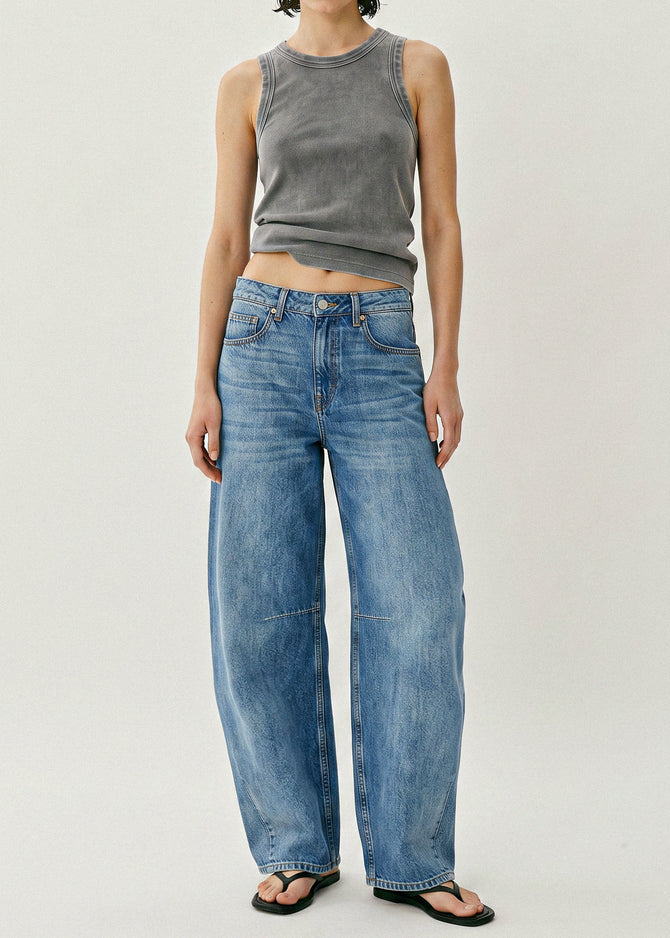
The Kallie Relaxed Curve in Baltimore is a useful visual example because its exterior carries distinct design information: a mid-dark hand-sanded wash, five-pocket construction, inner-knee darts, hem darts, and a full curved leg. It is made from 100% cotton, with an approximately 13-inch rise, 23.5-inch knee, 17-inch leg opening, and 31-inch inseam.
Turning this jean fully inside out before an allowed machine wash moves more direct drum contact away from those visible outer details. The step does not change the official care instructions, and it does not mean the surface will remain identical forever; it simply treats the designed face as the side worth protecting.
Frequently Asked Questions
Should jeans stay inside out in the dryer?
If the care label permits machine drying, leaving them inverted continues to protect the outer face from direct tumbling. Air-drying in a shaded area is usually gentler, but the garment label remains the authority.
Should white jeans be washed inside out?
They can be. The color-preservation benefit is less obvious, but inversion can still reduce surface abrasion. Wash white denim with compatible light colors and follow its own care label.
Should raw denim be turned inside out?
Yes when the approved cleaning method involves washing or soaking, but raw and shrink-to-fit denim can have specialized instructions. Follow the maker’s directions before choosing a machine cycle.
Can I turn jeans inside out without closing the zipper?
You can invert them, but closing the zipper first keeps the teeth contained and helps the fly hold its shape. Check that the zipper works smoothly and do not force damaged hardware.
The Bottom Line
For most washable jeans, the answer is yes: empty the pockets, treat visible stains, fasten the fly, turn the entire garment inside out, and use the settings required by the care label. The habit is simple because the principle is simple—let the interior take more of the wash-day friction.
If you want to see why exterior details are worth protecting, the Kallie Relaxed Curve in Baltimore makes the idea visible without turning the care advice into a sales pitch.