


Fabric softener is optional for jeans, and it is usually worth leaving out unless the garment’s care guidance supports using it. It changes the feel of fabric rather than doing the job of detergent. Before adding it, decide what you are trying to solve: a firm texture, an uncomfortable fit and a pair that needs cleaning are three different questions.
Softening and cleaning are different jobs
A bottle marked “conditioner” can sound like an essential partner to detergent. It is a separate category. Downy distinguishes detergent’s cleaning role from softener’s fabric-feel role: detergent removes everyday soils, while softener is formulated to soften and freshen. Do not substitute one for the other because the jeans only seem to need a refresh.
Softness also describes several experiences. A fabric can feel smooth under your fingertips but still have a structured shape. A roomy leg can feel comfortable without having a particularly soft surface. Being precise about the result you want makes it easier to decide whether another product is relevant at all.
Why denim guidance often says to skip it
Levi’s denim-care guide advises avoiding fabric softener because residue can affect denim’s texture and appearance. That is useful denim-specific guidance, not proof that one use has ruined every pair. It gives you a reason to be selective rather than treating softener as a standard requirement.
The mechanism matters here: Whirlpool explains that softener deposits ingredients on fibers to change their feel and reduce static. It also advises checking garment labels and using the amount specified on the product. More product is not a more precise way to achieve the texture you prefer.
For jeans with a finish you already like, the simplest decision may be to keep an unnecessary variable out of the routine. This is especially reasonable when the care label is unclear about additives: ask the brand before experimenting, rather than assuming that a cotton composition settles the question.

Name the problem before choosing the bottle
If the fabric feels firm
Notice when the firmness appears. Is it how the jeans have always felt, or a change you noticed after one particular wash? Compare the same pair at the same stage—fully dry, for example—rather than comparing damp denim with a pair you have worn all day. Record a new or persistent change and review the care routine before adding a finishing product.
If the jeans restrict movement
Try sitting, stepping and bending normally. Identify whether the limitation is at the waistband, the upper leg or another specific area. Softener is not a measured alteration to that part of the garment. A different size or cut, or advice from a tailor, addresses the fit question more directly than trying to make the fabric feel different.
If they need cleaning
Use the cleaning method allowed by the label. A pleasant fragrance is not a useful substitute for checking whether the garment has been cleaned appropriately. If you cannot identify an odor or a visible deposit, describe it to the retailer or a professional cleaner instead of layering several laundry products over it.
If you have already used softener
Do not assume that an ordinary use means the jeans are damaged. Look for an actual change: an unexpected surface feel, a visible mark or an odor that remains after drying. If there is no problem to address, repeated corrective washing adds work without answering a specific question.
If you do notice a change, keep the product name and the amount used. Consult its instructions alongside the jeans’ care label; ask for guidance if those do not resolve the issue. Avoid replacing softener with an improvised vinegar, baking-soda or detergent mixture. One uncertain treatment is not a reason to introduce several more.

A few quick answers
Do 100% cotton jeans need fabric softener?
No. Cotton content does not make it a required step. Follow the finished garment’s care guidance and consider whether there is a specific reason to add it.
Will softener make tight jeans the right size?
Do not rely on it for that purpose. Changing surface feel is different from making a controlled adjustment to the waistband, rise or leg measurements.
Are dryer sheets the same as liquid softener?
They are different formats with different directions, and some dryer sheets also contain softening ingredients. Check the package and the jeans’ drying instructions; switching formats does not remove the need for both.
Should I add extra softener for very firm denim?
No. Do not exceed the product directions. First establish whether the issue is the intended fabric feel, a change after laundering or a fit preference.
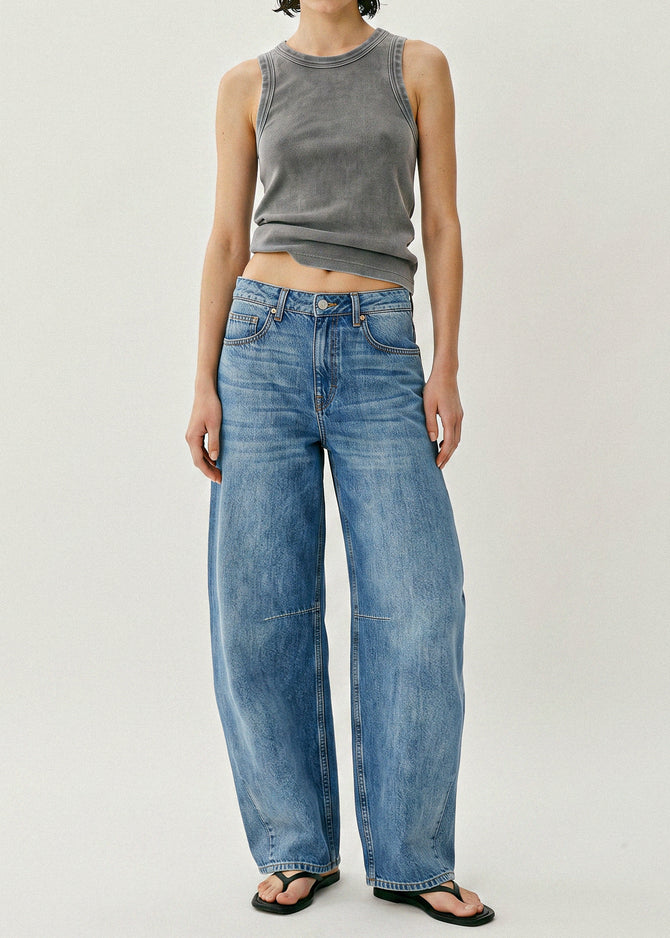
For a loose straight silhouette in 100% cotton, take a look at Miley Straight in Charleston. Its room through the leg and visible denim texture offer a useful starting point when deciding what you want your everyday jeans to feel like.