

Selvedge denim has a self-finished fabric edge created during weaving, often visible along the inside outseam when jeans are cuffed. That edge tells you something specific about the fabric’s construction. It does not tell you whether the jeans are raw, stretchy, heavy or right for your everyday wardrobe. Read it alongside the wash, composition and fit details.
Start with the edge, then read the rest
The word comes from “self-edge.” Traditional narrow shuttle looms create a finished edge as the fabric is woven. In jeans, manufacturers can retain that edge along the outseam. Levi’s selvedge guide identifies the inside leg outseam as a useful place to look.
Turn up one hem and follow the seam running along the outside of the leg. A distinct, clean edge may become visible. Compare that view with the product description rather than deciding from a tiny stripe in an outfit photograph.
The stripe is a clue, not the whole definition
You may associate selvedge with a red line, but the identifying yarn does not have to be red. Iron Heart’s denim glossary describes different selvedge identification colors. What matters is the woven edge itself. A decorative colored line elsewhere on a jean is not enough to identify how the denim was made.
Selvedge and raw answer different questions
Selvedge describes an edge construction. Raw describes denim sold without the washing treatments that create a washed finish. These terms can appear together, but one does not automatically establish the other. Selvedge fabric can be used for jeans that have already been washed and faded, a distinction also outlined in Levi’s raw-versus-selvedge explainer.
That distinction changes what you should ask before buying. If your interest is the visible edge, inspect the construction photographs. If your interest is starting with unwashed denim and developing your own wear pattern, look for an explicit raw or unwashed description and the maker’s care instructions.
Stretch is another separate detail
Read the composition and the brand’s stretch description as well. An edge does not give you a stretch percentage. Nor does a dark color tell you whether a fabric has been washed. Keep construction, finishing and movement as separate items on your shortlist.

A washed NOEND example makes the distinction visible
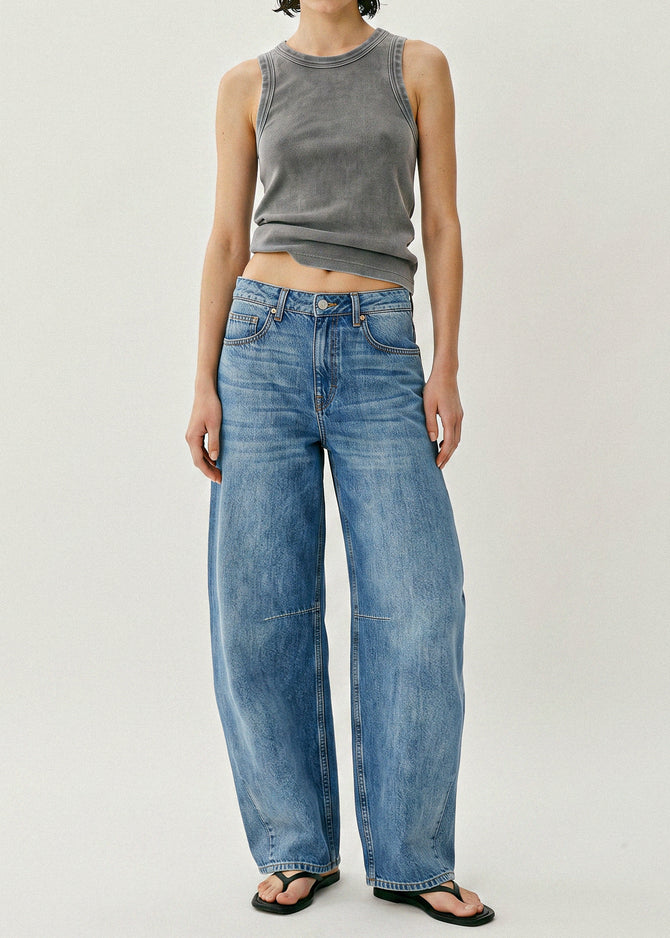
Selma Loose Straight Selvedge in Ontario is described as Japanese selvedge rigid denim with a vintage, heavily abraded dark-blue wash. It has exposed selvedge pocket seam detailing, a relaxed hip and thigh, and a straight leg. Its composition is 100% cotton, and the jeans are made in the USA.
Here, the washed appearance and selvedge construction belong to the same pair. You can choose the visible edge without choosing an unwashed starting point. The original product photographs show the cuff treatment and pocket detail, while the measurements help you judge the silhouette.
Use the current size guide and available sizes when comparing it with a pair you already wear. The word selvedge does not change the need to check the waist, rise, leg opening and intended length.
Let the detail fit the outfit
A cuff can make the inside edge part of the look. Try a simple knit and loafers, or a tee and plain sneakers, so there is room to notice the denim. You can also wear the hems down and let the pocket detailing provide the visible point of interest.
You do not need to turn every outfit into a demonstration of the fabric. Choose a fold because you enjoy the finish and the way it meets your shoes. Keep it comfortable around the ankle and check the result while walking.

Ask for the information the edge cannot supply
Before deciding, check the listed composition, wash treatment, measurements and care guidance. If the product page does not state a fabric weight or shrinkage allowance, ask for that information rather than estimating it from the selvedge stripe.
A useful purchase decision comes from the whole pair. Look at the finish you want to wear now, the cut you prefer and the care routine you can follow. The edge can be a detail you value without becoming the only reason to choose the jeans.
A few selvedge questions
Does selvedge always mean raw denim?
No. It describes the fabric edge. Selvedge jeans can have a washed finish, as Selma in Ontario does.
Do I have to cuff selvedge jeans?
No. Cuffing reveals the inside edge, but wearing the hems down is equally valid. Choose the finish you like.
Does a colored edge prove the jeans will fit better?
No. Fit still depends on the pattern, measurements and fabric. The edge does not replace a fit check.
Should I use a special washing routine?
Follow the instructions for the actual pair. Selvedge alone does not establish whether the denim is raw, prewashed or subject to a particular shrinkage allowance.
For a washed interpretation with the edge worked into the design, take a closer look at Selma Loose Straight Selvedge in Ontario. Its cuff and pocket details offer two ways to notice the construction in an everyday outfit.