

Transition denim into fall by keeping the jeans you already wear and changing the pieces around them: add one lightweight layer, introduce richer textures and colors, then replace open summer shoes with loafers or ankle boots. The goal is not to dress for winter early. It is to build adaptable outfits that still feel comfortable during warm afternoons and cooler mornings.
What makes a denim outfit feel like fall?
The jeans do not necessarily need to change. What creates the seasonal shift is the combination of texture, color, coverage, and footwear. A tank and sandals read as summer; the same denim with a fine knit, suede jacket, and closed-toe shoe immediately feels more autumnal.
Think in small adjustments rather than complete outfit replacements. Early fall often brings a large temperature difference between morning and afternoon, so every added piece should be easy to remove, carry, or restyle.
Use three signals instead of heavy layers
- Add one light outer layer, such as an unlined blazer, utility jacket, overshirt, or soft suede jacket.
- Introduce a fall texture through merino, brushed cotton, leather, suede, or a compact cardigan.
- Move from sandals to loafers, ballet flats, sneakers, or streamlined ankle boots.
These three changes communicate the season without making the outfit bulky or uncomfortable.
Start with a denim silhouette that can support layers
Fall outfits usually include more visual weight above the waist, so the shape of the jean matters. Straight, relaxed, curved, bootcut, and wide-leg styles can all work; the key is to balance the outer layer rather than hide the denim under it.
A cropped jacket can clarify a high rise. A longer blazer works well when the leg remains visible and the hem is not overwhelmed by the shoe. If the jean is full length, make sure the footwear gives the hem enough space to fall naturally instead of bunching excessively underneath it.
Recommended NOEND denim
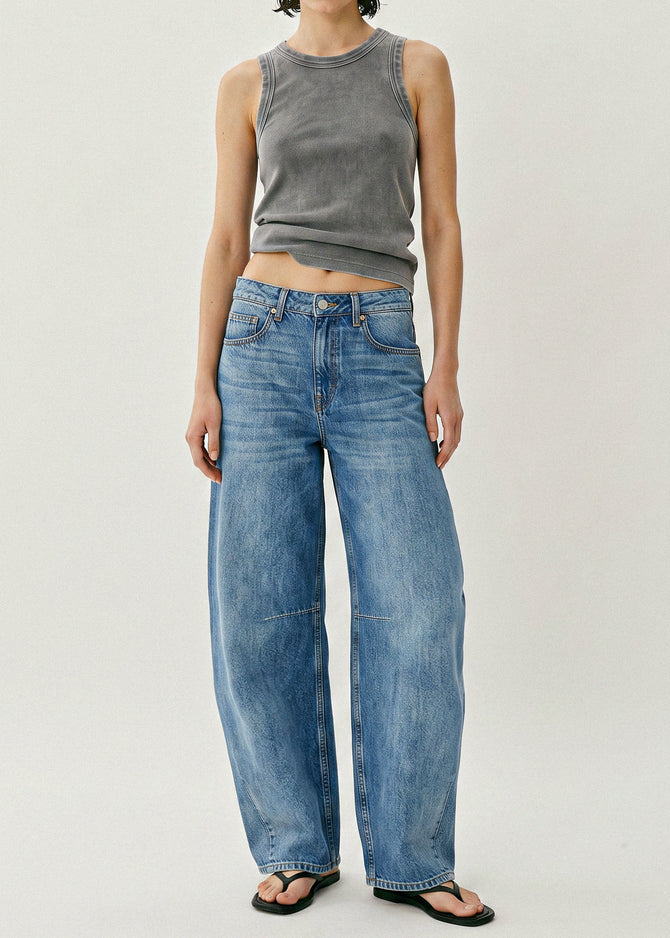
The Kallie Relaxed Curve in Baltimore is a useful early-fall example because its mid-dark blue wash works with both summer whites and deeper seasonal colors. The high-rise jean has a loose fit through the hips, a wide curved full-length leg, inner-knee darts, and hem darts that create a slight taper. The 31-inch inseam is designed to drape over the instep, so it pairs naturally with a streamlined loafer or ankle boot.
Kallie is made from 100% cotton, is listed as true to size, and is made in the USA. Fit is still individual, so compare the product measurements—approximately a 13-inch front rise, 23.5-inch knee, and 17-inch leg opening—with a jean you already own before selecting a size.
Build the outfit around a light base layer
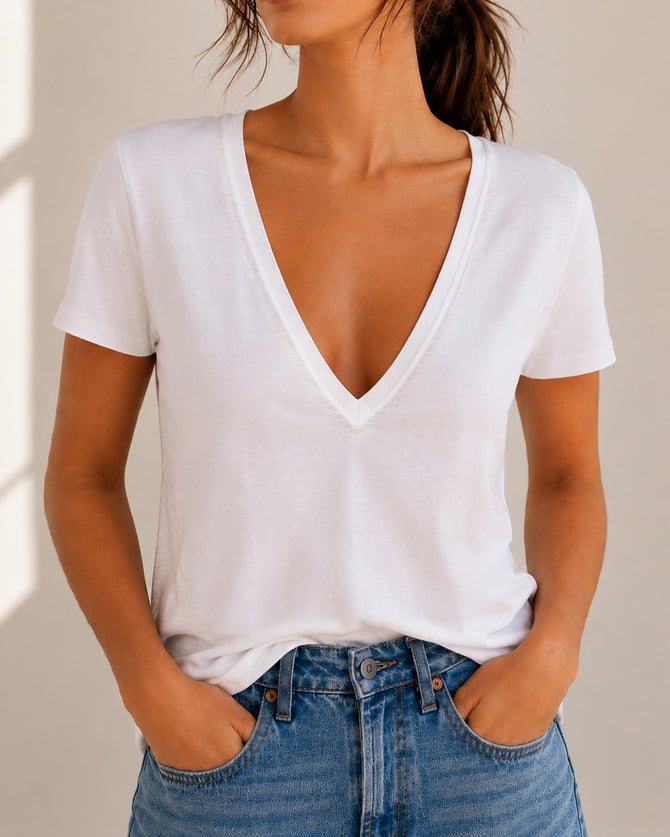
A simple base layer gives you room to respond to the temperature. Start with a ribbed tank, fitted tee, poplin shirt, or fine short-sleeve knit. These pieces look complete on their own during the warmest part of the day but sit smoothly under a jacket when the air cools.
Avoid starting with several bulky layers. Heavy fabric at the waist can fight with a high-rise jean and make the outfit harder to adjust. A close, breathable base plus one removable layer is usually more useful in transitional weather.
Let the neckline and rise work together
Tucking or partially tucking the base layer keeps the rise visible and gives a relaxed leg shape a clear starting point. If you prefer an untucked shirt, choose one that ends around the high hip rather than covering most of the jean.
Add one layer that changes the season
The most effective fall layer is not always the warmest one. It should introduce structure or texture while remaining easy to remove. An unlined blazer makes denim feel more polished. A utility jacket adds casual structure. A soft suede or brushed-cotton jacket brings warmth through texture rather than thickness.
Pay attention to length. A waist-length jacket emphasizes a high rise and works well with a curved or wide leg. A relaxed blazer that ends below the hip creates a longer vertical line, especially when the top and jacket stay close in color.

Change the shoe before changing the whole outfit
Footwear is often the fastest way to make denim feel ready for fall. Loafers add polish without much visual weight. Leather sneakers keep the outfit casual while feeling more substantial than a sandal. Ankle boots provide the clearest seasonal shift, but the shaft and toe should work with the jean’s hem.
With full-length denim
Choose a sleek boot or loafer that allows the hem to drape rather than catch. A bulky shaft can distort the line of a slightly tapered or curved jean.
With cropped denim
Use the exposed ankle intentionally. A close-fitting boot shaft can visually connect the jean and shoe, while a loafer or flat keeps the look lighter during warmer weeks.
Shift the palette without giving up lighter pieces
Fall color does not require an entirely dark outfit. White, ecru, stone, and pale blue can stay in rotation when they are grounded by camel, chocolate, charcoal, olive, oxblood, or black. Denim acts as the bridge between those light and deep shades.
A mid-dark wash is particularly flexible because it has enough depth to sit beside autumn colors without losing the visible fading and texture that make denim feel relaxed. If you are choosing between washes, the guide to light-wash versus dark-wash jeans explains how each one changes the range of an outfit.
Three early-fall denim formulas
Warm afternoon: shirt as the removable layer
Wear a fine tank with relaxed denim, then add an open white or pale-blue poplin shirt. Finish with a leather belt and loafers. The shirt offers light coverage but can be removed or tied around the shoulders when the temperature rises.
Polished weekday: knit plus relaxed blazer
Pair the jeans with a cream merino knit, charcoal blazer, structured bag, and dark ankle boots. Keeping the knit fine and the blazer softly constructed preserves the denim’s shape instead of making the upper half feel heavy.
Cool weekend: utility layer and tonal accessories
Combine a black fine-knit top with an olive utility jacket and dark leather boots. The deeper pieces frame the blue denim, while the jacket remains light enough for a mild day.

What should stay in storage until later?
Heavy wool coats, thick scarves, insulated boots, and multiple chunky layers usually make an early-fall denim outfit feel premature. Save those pieces for consistently cold weather. During the transition, prioritize fabrics that breathe and layers that can fit into a tote or rest comfortably over the shoulders.
The same restraint applies to color. You do not need to remove every white or pale piece from the wardrobe. Fall style often looks more modern when lighter neutrals remain part of the palette.
How do you make the transition practical?
Check the weather across the whole day, not just when you leave home. Choose a base outfit that works at the warmest predicted temperature, then add one layer for the coolest part. If rain is possible, prioritize a closed shoe and an outer layer that can tolerate light moisture rather than reaching automatically for heavier clothing.
Keep the jeans themselves consistent. Repeating one dependable pair across different tops, jackets, and shoes is more useful than assigning separate denim to every season.
Frequently asked questions
Can you wear light-wash jeans in fall?
Yes. Pair them with grounded colors such as chocolate, olive, charcoal, camel, or black, and add a closed-toe shoe. The surrounding textures create the seasonal shift; the denim does not have to be dark.
What jacket works best with jeans in early fall?
An unlined blazer, utility jacket, overshirt, lightweight suede jacket, or compact cardigan can all work. Choose the one that balances the jean’s silhouette and can be removed easily during a warm afternoon.
When should you switch from sandals to boots?
There is no fixed date. Make the change when mornings and evenings become cool enough that closed shoes feel more comfortable. Loafers and leather sneakers are useful intermediate options.
Do fall denim outfits need to use dark colors?
No. One or two deeper shades are enough to anchor white, cream, pale blue, or other light neutrals. Texture and coverage can signal fall just as effectively as color.
The easiest next step
Choose one pair of jeans, one breathable base, one removable jacket, and one closed-toe shoe. Try the outfit at full warmth and again with the jacket removed; both versions should feel complete. For a mid-dark, full-length option that works naturally with fall layers, explore the Kallie Relaxed Curve in Baltimore and compare its listed measurements with your own everyday denim before choosing a size.