
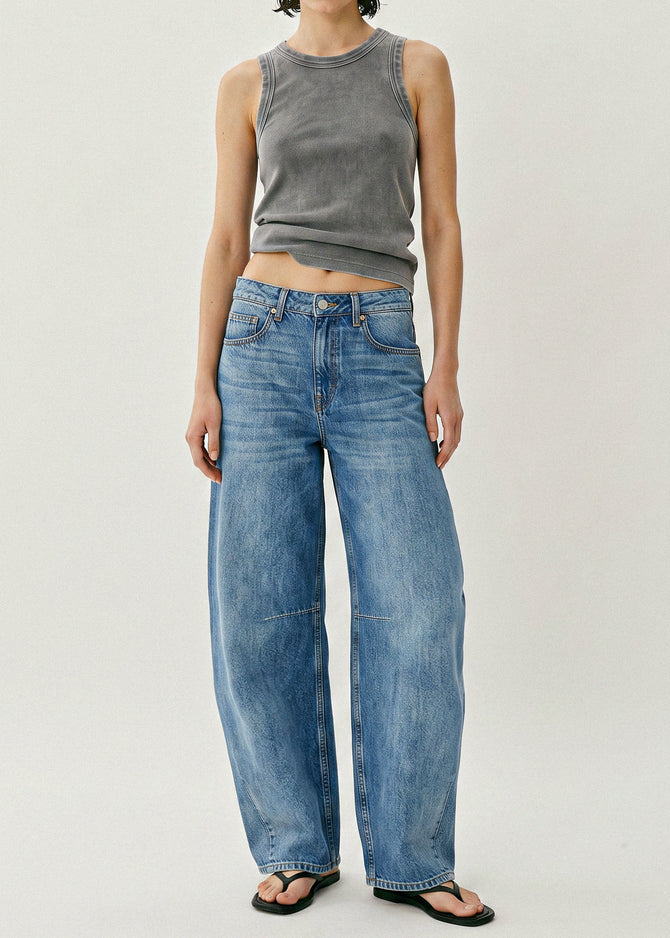


Intentional thigh room creates a clean silhouette that moves without looking accidentally oversized.
If you prefer more room through the thigh, start with relaxed, wide-straight, curved, or wide-leg jeans rather than sizing up a close-fitting cut. The right pair should fall cleanly from the hip, allow you to sit and lift your knee without pulling, and keep the waistband secure. Choose the leg shape you like first, then compare garment measurements and fabric—not the fit name alone.
Which Jean Cuts Give You More Room Through the Thigh?
Look for cuts described as relaxed, loose, wide-straight, curved, barrel, or wide-leg. These names do not guarantee the same fit across brands, but they point you toward patterns with more space in the upper leg. The difference is where that volume continues after the thigh.
Relaxed and wide-straight
A relaxed or wide-straight jean usually carries its room from the hip through the thigh, then falls in a relatively direct line toward the hem. It is a useful starting point when you want ease without a strongly tapered or flared silhouette.
Curved and barrel
A curved leg adds volume through the thigh and knee, then narrows toward the hem. Darts or shaped seams may control that volume. The result can feel roomy while still looking deliberate, because the fullness is built into the pattern instead of created by simply wearing a larger size.
Wide-leg and balloon crop
A wide leg continues the space below the thigh, while a balloon crop may become fuller around the knee before finishing at a shorter hem. Both can provide generous movement, but their visual effect is different: one creates a long column, and the other emphasizes shape and ankle exposure.
How Can You Tell If the Thigh Has Enough Ease?
Stand naturally and look at the front and side seams. They should hang without being pulled sharply forward or backward. A few soft folds are normal, especially in rigid denim, but tight horizontal or diagonal drag lines across the upper thigh usually indicate strain. Sewing fit guidance likewise treats pulling and diagonal thigh wrinkles as a sign that more room may be needed.
Next, sit in a normal chair, take a long step, and raise one knee. The denim should move with you without forcing the waistband downward or making the crotch pull sharply. Check the back as well: extra thigh room should not require a sagging seat or a waistband that floats away from the body.

Why Sizing Up Is Not Always the Best Fix
Going up a size increases more than the thigh. It can also enlarge the waistband, rise, seat, and overall leg, which may solve one pressure point while creating several new fit problems. A better first step is to change the cut: try a relaxed or wide style in the size that corresponds to your waist and hip measurements.
If the product page provides garment measurements, compare them with a pair you already own. Waist and hip numbers are still important, but a knee measurement, leg opening, or product description that clearly states “loose through the thigh” can reveal how the leg is intended to fit. Our guide to reading a jeans size chart explains how to make that comparison without relying on the size number alone.
Does Stretch Denim Create More Thigh Room?
Stretch can make a close fit easier to move in, but stretch and room are not the same thing. A narrow jean with elastane may flex around the thigh while still looking fitted. A rigid jean can feel more spacious if the pattern includes enough circumference and the leg is cut away from the body.
Decide whether you want actual visual space, flexible contact, or both. For a structured silhouette with clear air between denim and leg, prioritize cut. For a closer silhouette that needs easier movement, a small amount of stretch may help. Fabric composition should refine the decision after the shape is right.
Three NOEND Approaches to More Thigh Room
A sculpted curved leg: Kallie Relaxed Curve
Kallie Relaxed Curve in Baltimore is cut loose around the hips with wide curved legs. Inner-knee and hem darts shape the volume, while the 13-inch front rise and 31-inch inseam create a full-length silhouette. It is made from rigid 100% cotton, so the room comes from the cut rather than added stretch.
A long wide-straight line: River
River High Rise Wide Straight in Reno offers a 12-inch rise, 33-inch inseam, 20.5-inch knee, and 18.25-inch opening. Its rigid 100% cotton construction and long, wide-straight leg make it a useful option when you want upper-leg ease to continue in a cleaner vertical line.
A cropped wide balloon shape: Queen
Queen High Rise Crop Wide Leg in Thunder is explicitly designed to fit loose through the thigh and widen at the knee with an engineered dart. It has a 28-inch inseam and 99% cotton, 1% Lycra fabric. The product page recommends sizing up for a comfort fit, so check the available size measurements before choosing.

How to Choose Among the Three Shapes
- Choose curved or barrel when you want visible volume through the thigh and knee with a controlled taper at the hem.
- Choose wide-straight when you want space through the upper leg and a long, uninterrupted line.
- Choose a cropped wide leg when you want thigh ease with ankle exposure and a more shaped knee-to-hem proportion.
Rise and hem length will change the final balance, so evaluate them separately from thigh room. If waistband height is the next decision, compare the fit checks in High-Rise vs. Mid-Rise Jeans: Which Rise Is Right for You?. If you prefer a narrower leg, review how straight-leg jeans should really fit.
A Quick Fitting-Room Checklist
- Check that the side seams hang in a stable line rather than twisting toward the front.
- Look for soft drape instead of sharp horizontal or diagonal pulling across the thigh.
- Sit, step, and lift one knee without the waistband being dragged down.
- Confirm that the seat and waist still fit; extra thigh room should not make the entire jean oversized.
- View the full silhouette from the side, because two jeans with equal thigh ease can have very different leg shapes.
Frequently Asked Questions
Are wide-leg jeans always loose through the thigh?
No. Some wide-leg jeans are fitted through the hip and upper thigh before widening lower on the leg. Read the fit description and inspect the product images rather than assuming the hem width tells you the thigh fit.
Should roomy jeans touch the thigh at all?
They can. “Roomy” does not require a visible gap at every point. The important signals are comfortable movement, clean seam alignment, and the absence of persistent strain lines.
Can rigid denim work if I want more thigh room?
Yes. Rigid denim can be comfortable when the pattern supplies enough ease. It will feel more structured than stretch denim, so judge it through sitting and movement rather than expecting elastic give.
Should I size up for more room through the thigh?
Only when the specific product guidance or your measurements support it. First try a roomier cut in your measured size; otherwise, sizing up may make the waist and seat too loose.
The Bottom Line
For more room through the thigh, change the silhouette before changing the size. Relaxed, curved, wide-straight, and wide-leg patterns build ease where you need it while preserving a secure waist and intentional shape. Compare measurements, check the fabric, and test the jeans while sitting and moving.
To see the differences in real cuts, browse the sculpted Kallie Relaxed Curve, the long-line River Wide Straight, or the cropped Queen Wide Leg.