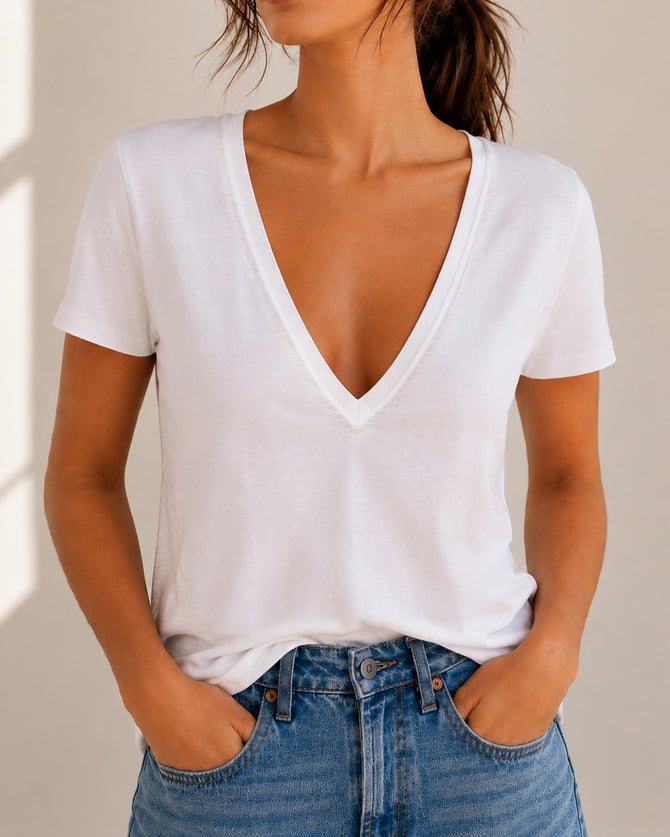
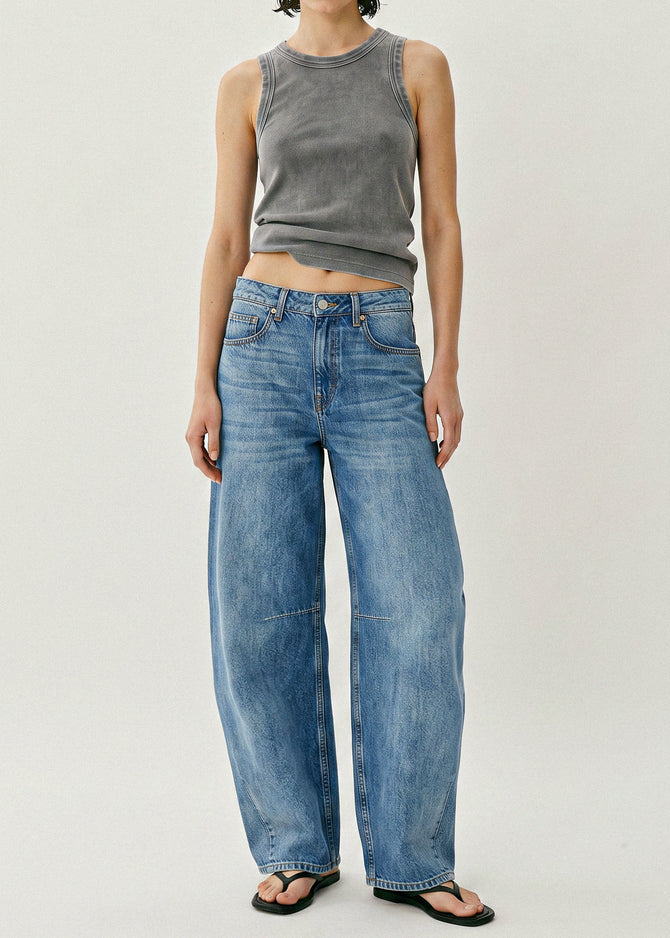


If you have a smaller waist and fuller thighs, start with jeans that give your hips and thighs enough room while keeping the waistband close to your waist. A curve or relaxed-curve fit is a useful starting point. Then check the actual rise, fabric, measurements, and leg shape rather than relying on a size label or a promise that one cut suits everyone.
Kallie Relaxed Curve in Holland keeps the waist close while giving the hip and thigh more room.
What should jeans fit like at a small waist and fuller thighs?
Fit the jeans to the fullest part of your body first. When the hip and thigh area is too tight, you may see horizontal strain lines, pocket pulling, or a fly that will not lie flat. When the waistband is too large, the back may stand away from your body even though the hips fit. Neither issue is solved by choosing a smaller or larger size at random.
A good starting fit should:
- close comfortably at the waist without digging in or requiring a belt to hold the jeans up;
- allow you to sit, walk, and bend without sharp pulling through the seat or upper thigh;
- keep the front pockets and fly relatively flat rather than stretched open;
- leave enough room for the denim to follow your shape without creating a large waistband gap.
Try on jeans with the shoes and top you are most likely to wear with them. A waistband that feels secure while standing can feel very different when you sit, and a full-length leg can change how the proportion looks with flats versus a low heel.
Which jean cuts are usually worth trying?
Relaxed-curve or curve fits
A relaxed-curve cut is designed around more ease through the hip and thigh, with shaping that can reduce the need to buy for the thighs and then deal with a very loose waist. NOEND’s fit guide describes its Relaxed Curve Fit as relaxed through the hip and thigh with subtle tapering, and specifically lists reducing waistband gap as a use case.
High-rise and mid-rise options
Rise is a comfort and proportion decision, not a universal solution. A higher rise can give the waistband more surface area to sit against your waist, while a mid rise may feel better if you prefer less coverage. Measure the rise on the actual garment and compare it with where your natural waist or high hip sits; two jeans both labeled “high rise” can feel very different.
Straight, wide, or gently shaped legs
The leg shape should support the way you want the jeans to look after the waist and hip fit is solved. A straight leg offers a clean everyday line. A wide leg gives more room below the hip and can balance a fuller upper leg. A softly shaped or darted leg can keep a relaxed cut from looking shapeless. The best silhouette is the one that lets you move comfortably and gives you the hem break you actually want.

How should you choose the fabric?
Fabric changes both the first try-on and the way the jeans settle. Rigid 100% cotton denim can feel firm at first and tends to hold a defined shape. Stretch denim may feel immediately flexible, but it should still fit securely at the waist and not depend on extreme tightness to stay up. Read the product’s fiber content and fit notes, then use the brand’s measurements instead of assuming that a familiar number will fit the same way everywhere.
For rigid denim, do not size down automatically. A too-small pair can remain restrictive even if it softens with wear. The waistband should close without a fight, and the hip and thigh should not show persistent strain when you move.
What should you check in the fitting room?
- Waist: Fasten the jeans and slide two fingers inside the waistband. You want secure contact, not a painful pinch or a large gap.
- Seat and thigh: Sit, take a few steps, and squat slightly. Look for comfort and a smooth line rather than a perfectly motionless fabric.
- Pockets: Check whether the pocket openings pull outward. Persistent pulling usually means the hip or upper thigh needs more room.
- Rise: Make sure the front and back rise sit where you expect when you move, not only when you stand still.
- Hem: Check the inseam with your usual footwear. A full-length leg can puddle with flats and look intentional with a heel, so decide which break you want before keeping the pair.
Recommended NOEND denim for this fit question
Kallie Relaxed Curve in Holland is the clearest verified NOEND match for shoppers who need more ease through the hip and thigh while looking for a more secure waist-to-hip relationship. The current product page describes a relaxed curve fit with a loose fit around the hips, a 13-inch front rise, a 17-inch leg opening, and a 31-inch inseam. It is made from 100% cotton in the USA and is listed as fitting true to size.
The Kallie is a wide, full-length silhouette rather than a close straight leg. Hem darts create a subtle taper, and inner-knee darts create a gentle inward curve. That makes it a useful option if you want thigh room and a relaxed leg with some visible shaping. It is not the right choice if you are specifically looking for a slim, cropped, or stretch jean.
Before ordering, compare your waist, hip, and preferred inseam measurements with the current size information. For rigid denim, NOEND’s fit guide recommends starting with your regular size; treat that as a starting point, then confirm the garment measurements and your desired ease.

Can tailoring fix a waist gap?
Sometimes. If the hips and thighs fit well and the waistband has only a modest gap, a tailor can adjust the center back or waistband. Tailoring is less useful when the thighs are already tight, the rise is wrong, or the fabric is pulling across the seat. In those cases, start with a different cut or size before altering the waist.
What is the simplest way to choose your size?
Take your waist and fullest-hip measurements, compare them with the product’s size information, and prioritize the measurement that controls comfort in the garment’s tightest area. Then check the rise and inseam. If you are between sizes, use the fabric composition and the brand’s fit guidance rather than applying a universal “size up” or “size down” rule.
FAQ
Are curvy jeans only for one body shape?
No. “Curvy” or “relaxed curve” describes how the garment is proportioned, not a requirement about your body. Use the cut if it solves your waist-to-hip fit problem and feels right when you move.
Should jeans for fuller thighs feel tight at first?
They should feel secure, but they should not restrict sitting, walking, or bending. Firm rigid denim can soften, but persistent pulling through the hip or thigh is a sign to try a different cut or size.
Is a high rise always better for a small waist?
No. A high rise can feel secure and provide more coverage, but the waistband shape and hip-to-waist proportion matter more than the label alone. Compare the actual rise and waist measurement.
What if the hips fit but the waist is loose?
Try a curve or relaxed-curve cut first. If the gap is small and the rest of the fit is right, a tailor may be able to refine the waistband. Do not solve a major waist gap by choosing a size that makes the thighs uncomfortable.
Start with the fit that gives your fullest measurement enough room, then refine the waist, rise, leg shape, and hem. That order makes it easier to find jeans that feel secure at the waist without asking the thighs to compromise.