
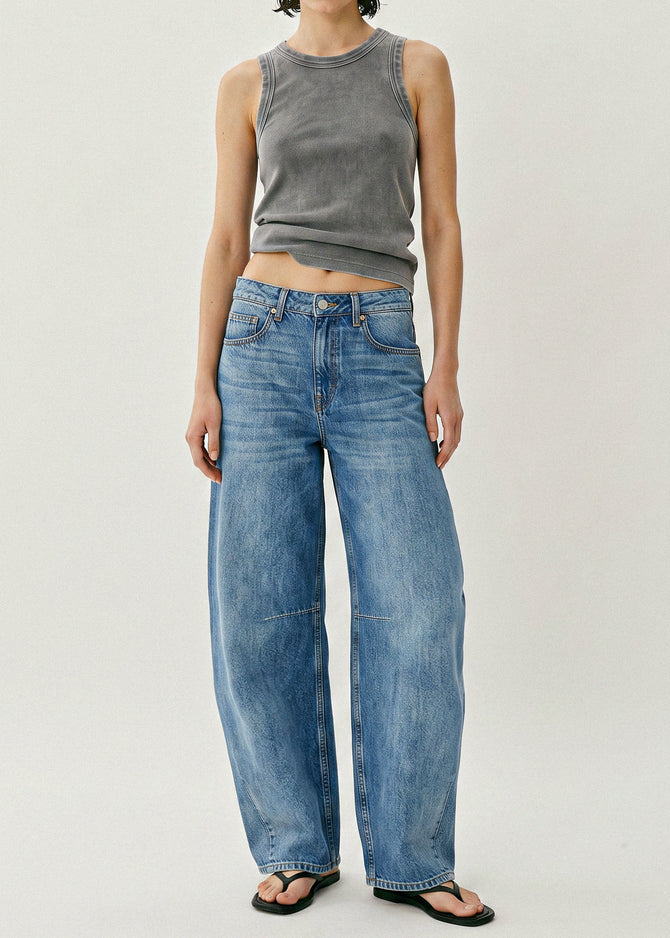


Turning dark jeans inside out reduces direct abrasion on the outer face during washing.
You cannot stop dark denim from changing forever, but you can slow visible fading: wash only when needed, follow the care label, turn jeans inside out, use cold water and a short gentle cycle, measure a mild detergent, and air-dry in the shade. The main goal is to reduce unnecessary heat, friction, and repeated full washes.
Dark indigo and black denim are prized for their depth, but that depth also makes gradual color change easy to notice. Some fading is part of denim’s character. The useful distinction is between intentional, wear-led evolution and premature dulling caused by an unnecessarily aggressive laundry routine.
Why Does Dark Denim Fade?
Color loss is not caused by one mistake. Wear creates friction at the lap, pockets, knees, seat, and hems. Washing adds water, detergent, agitation, and contact with other garments. Drying can add heat and more tumbling. Over time, the fabric surface and its color naturally change.
That does not mean dark denim should never be washed. Clean denim lasts better than denim left with built-up soil, body oils, or untreated stains. The smarter strategy is to clean it when needed, using the least aggressive method that suits the garment and the soil level.
Start with the care label
The sewn-in care label takes priority over generic advice because fabric blends, coatings, trims, and finishes vary. If the label calls for a specific temperature, cycle, drying method, or professional cleaning, follow it. The routine below is a practical default for washable dark denim—not permission to override the garment’s instructions.
Before Washing: Reduce the Need for a Full Cycle
Air out and spot-clean first
If the jeans are not sweaty, stained, or noticeably soiled, airing them between wears may be enough. For one small mark, blot gently with a damp cloth and a tiny amount of mild cleanser. Test an inconspicuous area first, work from the outside of the stain inward, and avoid scrubbing a pale ring into the surface.
This is not a rule to postpone washing indefinitely. It is a way to avoid running an entire garment through a cycle for a single removable spot. If odor or soil remains, wash the jeans. For a fuller guide to timing, see How Often Should You Really Wash Your Jeans?
Empty, close, and turn inside out
Remove everything from the pockets, close the zipper or button fly, and turn the jeans completely inside out. This protects the outer face from some of the direct rubbing and detergent exposure inside the machine. The American Cleaning Institute recommends turning dark garments inside out and using a shorter cycle when machine washing is allowed.
Sort by color and fabric weight
Wash black jeans with black or similarly dark garments. Keep new dark denim away from whites and pale colors, especially during early washes when excess dye transfer may be more noticeable. Avoid pairing denim with delicate lightweight items that can be abraded by heavier seams, rivets, and hardware.

How to Wash Dark Denim With Less Visible Fading
Use cold water and a gentle, shorter cycle
When the care label permits machine washing, cold water and a gentle or delicate cycle are sensible defaults for dark jeans. A shorter, lower-agitation program reduces unnecessary mechanical action. The American Cleaning Institute’s dark-clothing guidance likewise recommends cold water, a shorter cycle, and air-drying to slow fading.
Measure a mild detergent
Use the amount specified for the load size, machine type, and water conditions. More detergent is not a stronger form of care; excess product can leave residue that makes dark fabric look dull. A mild liquid detergent or one formulated for dark colors is a practical choice when compatible with the care label.
Skip improvised “color-locking” treatments
Household recipes involving salt or vinegar are often presented as universal fixes, but dye systems and fabric blends differ. They are not substitutes for the care label, correct detergent dosing, cold water, and lower friction. Avoid chlorine bleach and any whitening or stain product that the label does not permit.
Do not pack the washer tightly
A crowded drum can prevent proper rinsing and force garments to grind against one another. Give the jeans room to move, but do not run an unnecessarily large cycle for one lightly worn pair. A small, balanced load of similarly dark items is the practical middle ground.
Drying Is Part of Color Care
Air-dry away from direct sunlight
After washing, gently reshape the jeans and smooth the seams. Hang them securely from the waistband or lay them flat as the care label allows. Choose a shaded, ventilated place rather than direct sun. If you must machine-dry, use the lowest setting the label permits and remove the jeans before they are overdried.
Press—do not wring
If the jeans hold excess water, place them flat on a dark or colorfast towel and press gently. Twisting can stress the fabric, seams, and shape. Never apply a hair dryer, radiator, or concentrated heat in an attempt to speed up one wet area.

A Dark NOEND Example: Queen in Black
The Queen High Rise Crop Wide Leg in Black gives these care steps a concrete reference point. It is made from 99% cotton and 1% Lycra, with an approximately 12-inch rise, 29-inch inseam, 19-inch knee, and 21-inch leg opening. The deep black finish and clean cropped wide-leg shape make surface fading easy to see, so gentle laundering and low-heat drying are especially relevant.
Because the jean contains a small elastic component, the care label also matters for more than color: unnecessary high heat can be hard on stretch recovery. That does not require a complicated ritual. Turn the pair inside out, use a measured detergent and cold gentle wash when needed, then dry it away from direct heat.
The Five-Step Routine to Remember
Check the care label. Spot-clean small marks. Wash inside out with similar dark colors in cold water on a gentle cycle. Measure the detergent rather than guessing. Reshape and air-dry in shade. Those five habits address the main controllable sources of premature dulling without turning denim care into a ceremony.
Frequently Asked Questions
Will dark denim always fade?
Some change is normal with wear and laundering. Good care slows premature, uneven, or washed-out-looking fading; it cannot freeze the original color permanently.
Should I wash new dark jeans separately?
If the care label advises it—or if the wash is very dark—separate early washes from pale clothing. Excess surface dye can transfer even when the jeans themselves are not being damaged.
Is hand washing always better?
Not automatically. Rough soaking, scrubbing, or wringing by hand can be more aggressive than a correctly loaded gentle machine cycle. Use the method specified by the care label and handle the fabric gently.
Can I restore denim after it has faded?
Ordinary washing cannot replace lost color. Home overdyeing may alter stitching, labels, hardware, and stretch performance, so it is a separate alteration project—not part of routine care.
The Bottom Line
The best defense against premature fading is restraint: fewer unnecessary cycles, less friction, colder water, correctly measured detergent, and less heat. Let wear create the character rather than an aggressive wash day.
If a deep black jean fits the rotation you are building, the Queen High Rise Crop Wide Leg in Black offers a polished example—and a good reason to make the gentle routine automatic.