
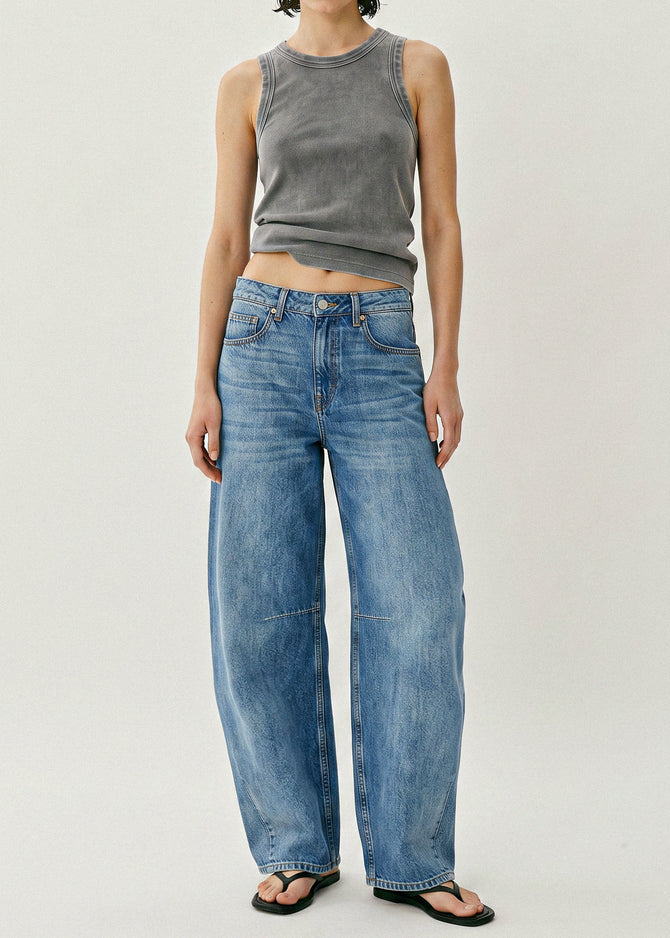


The best jeans for curvy women fit the fullest part of the hip and thigh without leaving a large waist gap. Start with a curve or relaxed-curve cut, then check rise, fabric, leg shape, and movement. A straight relaxed cut can also work when you want a cleaner line—provided the waist and seat stay comfortable.
What should jeans fit like on a curvy body?
Think about proportion before the number on the tag. A useful fit check is:
- Waist: The waistband should sit securely without pinching, rolling, or creating a dramatic gap at the back.
- Hip and seat: The fabric should skim the fullest area without horizontal drag lines, pocket distortion, or pulling at the fly.
- Thigh: You should be able to sit, walk, and climb stairs without the denim feeling locked around the upper leg.
- Rise: The front and back rise should stay in place when you bend, rather than cutting in or sliding down.
- Hem: The opening and length should balance your shoes and the volume of the hip and thigh.
If the hips fit but the waist floats, that is a proportion issue—not a reason to squeeze into a smaller size. Try a curve cut first, then consider a small waist adjustment by a tailor if the rest of the fit is right.
Which jean cuts work well for curvy women?
Relaxed-curve jeans
A relaxed-curve cut is a strong starting point when you want ease through the hip and thigh with a shaped leg. It can reduce the waist-gap problem while keeping the silhouette intentional. The Kallie Relaxed Curve uses a soft curve through the hip, subtle knee and hem darts, and a wide easy leg. Its 12.5-inch front rise and 30-inch inseam are useful reference points, but measurements are not universal across brands or bodies.
Straight relaxed jeans
A straight relaxed jean creates a cleaner vertical line and can be comfortable on curvier bodies when the seat and thigh have enough room. This is a good alternative if you prefer less volume at the hem. Check the waistband while seated: a straight cut may feel right in the hip but still need a different size or a small alteration at the waist.
Wide or curved-leg jeans
Wide and curved legs can be flattering because they allow the fabric to fall away from the hip instead of clinging to it. The key is balance: the waistband and seat must be stable, and the hem should not overwhelm your shoes or shorten your visual line. “Flattering” is a proportion and styling result, not a rule that applies to every body.

How does fabric change the fit?
Fabric changes both the first try-on and the way jeans keep their shape. Rigid 100% cotton denim can feel structured at first and soften with wear; it should feel secure, not painfully tight. Stretch denim may feel easier immediately, but a very soft fabric can relax more during the day. Read the fiber content, then judge the fit by movement and recovery rather than expecting every pair to behave the same way.
The Kallie Relaxed Curve is made from structured 100% cotton denim designed to soften while holding its shape. If you choose rigid denim, leave enough room to sit comfortably from the first wear—do not rely on a dramatic size change later.
Should curvy women choose high-rise jeans?
High rise can be helpful when you want the waistband to meet the natural waist and keep the back rise from dropping. It is not automatically best for every curvy body. Compare the rise to your torso length, and check whether the waistband stays smooth when you sit. A mid rise can be more comfortable if a high rise cuts into your ribs or lands at an awkward point.
How should you choose between a curve and straight fit?
Use the fit problem you are solving as your guide:
- Choose a relaxed-curve cut when you need more room through the hip and thigh, want a shaped leg, or often experience a waist gap in standard cuts.
- Choose a straight relaxed cut when your waist, seat, and thigh already feel balanced and you prefer a straighter line with less hem volume.
- Compare measurements instead of assuming your usual size. Rise, knee, leg opening, and inseam can change the visual result as much as the waist size.
Recommended NOEND Denim options
Kallie Relaxed Curve in Mocha is the most direct recommendation for this question. It has a relaxed curve through the hip, a wide easy leg, subtle knee and hem darts, a 12.5-inch front rise, a 30-inch inseam, and structured 100% cotton denim. It is made in the USA and fits true to size according to the current product page. Treat those details as a starting point, then compare them with your own measurements.
Kent Relaxed Straight in Michigan is the alternate when you want a straighter silhouette. The current product page lists a relaxed straight fit, approximately a 10-inch rise, a 15.75-inch leg opening, a 31-inch inseam, and 100% cotton denim. The page notes that you may want to size up, so use the brand’s fit note together with your waist, hip, and thigh measurements.
How can you style jeans for a balanced silhouette?
Start with the proportion you want to create. A tucked tee or shorter top lets a higher rise read clearly; a cropped jacket keeps a wide leg from looking visually heavy. Loafers, sneakers, and low heels each change the break at the hem, so try the jeans with the shoes you actually wear. If the denim is rigid, keep the top layer easy enough to move in rather than adding more tightness everywhere.

What should you check when trying them on?
- Fasten the jeans without holding your breath. The waistband should be secure but not painful.
- Sit down for a minute. Look for pressure at the waist, gaping at the back, or the fly pulling open.
- Walk and take a few stairs. The thigh and seat should move with you without creating deep drag lines.
- Check the side seam and pockets. Twisting or pocket flare often signals that the hip needs more room.
- Try your usual shoes. A wide or curved leg needs a hem that lands intentionally rather than bunching randomly.
- Recheck the fabric content and care instructions before deciding whether the first-wear feel is right for you.
Curvy-jean fit questions, answered
Are curvy jeans only for hourglass bodies?
No. “Curvy” describes the relationship between waist, hip, and thigh measurements, not one fixed body shape. Choose the cut that solves your actual fit issue.
Should curvy jeans feel tight at first?
They should feel secure, not restrictive. Rigid cotton may soften with wear, but it should still allow you to sit, walk, and breathe comfortably on day one.
Are wide-leg jeans flattering on curvy bodies?
Often, yes—when the waistband and hip fit are stable and the hem is balanced with your shoes. The same width will not create the same result on every body or outfit.
What if the waist gaps but the hips fit?
Try a curve cut first. If the hip, thigh, rise, and length are otherwise right, a modest waist adjustment can be more comfortable than sizing down and compressing the seat.
Bottom line: The best jeans for curvy women are the pair that respects your proportions and lets you move. Start with the fullest point of your hip and thigh, then refine the rise, fabric, leg shape, and hem. For a direct curve-fit option, begin with Kallie Relaxed Curve; for a straighter alternative, compare Kent Relaxed Straight.