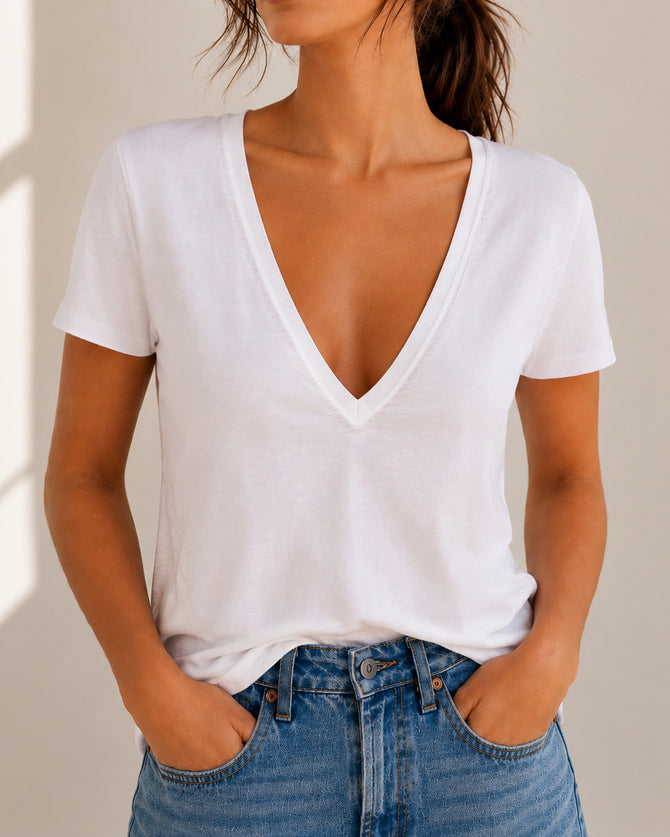
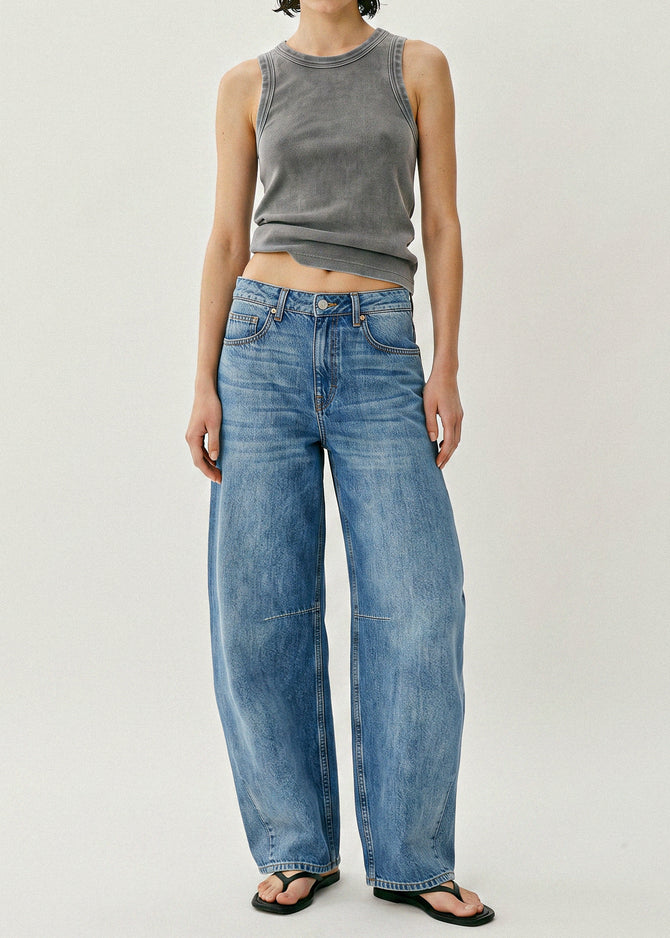


The denim silhouettes that work most easily with fall layers are relaxed straight legs, cropped curves, and full-length flares. Straight jeans tolerate the widest range of jackets, cropped curved jeans balance longer open layers, and flares look cleanest beneath shorter jackets. The real key is contrast: pair a fuller jean with a controlled top layer, and keep the waistband or upper hip visually clear.

Start with the volume of the jeans
A fall layer adds fabric at the shoulders, torso, and often the hip. The jeans need to either continue that volume in a controlled way or provide contrast beneath it. When both pieces are very oversized, the body can disappear inside the outfit. When both are extremely fitted, the look may feel less relaxed than the season's soft knits and outerwear suggest.
Instead of asking whether a silhouette is universally flattering, look at two practical points: where the jacket ends and where the jean begins to widen. Keeping those two visual breaks from competing is what makes the outfit feel deliberate.
Use one clear shape as the lead
If the jeans have a strong curved or flared shape, let them lead and keep the layer simpler. If the coat is long, textured, or generously cut, a clean straight leg can provide the quieter base.
Why do cropped curved jeans work with longer layers?
A cropped curved jean creates visible space around the ankle, which keeps a knee-length cardigan or open duster from making the entire outfit feel long and heavy. The outer layer adds a vertical frame while the curved leg remains readable inside it.
Keep the base top relatively close to the body and wear the long layer open. This preserves a visible line from the waistband through the center of the outfit. Flat sandals may work early in fall, while loafers or slim ankle boots provide more coverage later in the season.
A NOEND cropped-curve example
The Ava Flutter Slung Fit Jeans in Azure Vista have a 26.5-inch inseam, dart-engineered knee, 16.5-inch opening, and intentional flutter hem. The dark-to-mid blue 100% cotton denim keeps the curved shape defined beneath a soft long cardigan rather than letting the layer dominate it.
Why are relaxed straight jeans the most flexible?
A relaxed straight leg sits between narrow and highly voluminous silhouettes, so it can work under cropped jackets, hip-length utility layers, cardigans, and softer blazers. The straight line also provides stability when the outer layer has texture, pockets, or a slightly boxy cut.
For the simplest proportion, let the jacket end around the upper hip and keep it open enough to show part of the waistband. A layer that ends at the widest point of a relaxed jean can make both pieces look broader, especially when the jacket has a stiff hem.
A NOEND relaxed-straight example
The Selma Loose Straight in Philadelphia is relaxed through the hip and thigh before continuing straight to the ankle. Its listed measurements include an 11-inch rise, 30-inch inseam, 20-inch knee, and 19-inch leg opening. The 100% cotton construction gives the light vintage-blue shape enough structure for an olive utility jacket or soft blazer.
Why do flares look strongest with shorter jackets?
A flare changes direction below the knee, so the cleanest layers usually end well before that point. A cropped suede jacket, short leather jacket, or waist-length cardigan leaves the long leg line uninterrupted and makes the opening of the flare easy to see.
Long coats can still work with flares, but the coat should hang cleanly and stay open enough to reveal the fitted upper leg. A bulky jacket ending low on the thigh may hide the transition from slim knee to wider hem—the feature that defines the silhouette.
A NOEND flare example
The Scarlett Mid Rise Flare in West Plains has a 10-inch rise and 33-inch inseam, with a slim fit through the leg before opening into a balanced flare. Its listed fabric is 99% cotton with 1% Lycra. A jacket ending near the waistband keeps the full light-blue leg visible.

What about wide-leg jeans?
Wide-leg jeans work well with fall layers when the top half has a defined edge. Try a fitted knit beneath a short boxy jacket, or use a longer coat that hangs vertically without excessive padding. The combination becomes harder when a wide jean, long oversized sweater, and bulky jacket all compete for attention.
Keep the foot visible enough to anchor the width
A loafer, pointed boot, or clean low-profile sneaker helps finish the wide line. If the hem covers the entire shoe or drags, the outfit can look heavier once a fall jacket is added. Check the full outfit with the intended footwear rather than judging the jeans barefoot.
How should jacket length relate to jean shape?
Waist-length layers emphasize a flare
Use a short jacket when the jean's main visual change happens below the knee. The gap between jacket hem and flare opening creates a long, uninterrupted center section.
Hip-length layers suit straight legs
A utility jacket, cardigan, or blazer ending around the upper hip works naturally with a straight or relaxed-straight jean. Open the layer or make a small front tuck so the rise does not disappear completely.
Long open layers frame cropped curves
A long cardigan or duster can echo the vertical line of the outfit while the cropped curved hem prevents it from feeling floor-length. Avoid a heavily padded long layer if the jean already has substantial volume through the knee.
Does denim wash change how layers feel?
Wash affects the visual weight of the outfit, even when the silhouette stays the same. Darker indigo provides contrast beneath cream, camel, and olive layers. Light vintage blue feels softer beside charcoal, chocolate, and faded black. Neither is inherently more appropriate for fall; the surrounding palette creates the seasonal effect.
Repeat one tone to connect the pieces. A brown jacket can relate to brown loafers, while a charcoal cardigan can connect to a black bag or shoe. This makes the layer feel integrated instead of added after the outfit was already complete.
Three reliable silhouette-and-layer formulas
Cropped curve + fitted tee + long cardigan
Keep the inner top simple, leave the cardigan open, and finish with loafers. The long layer frames the curved leg while the cropped hem exposes the shoe.
Loose straight + fine knit + utility jacket
Choose a hip-length jacket with moderate structure and wear it over a clean knit. The straight leg supports the jacket without adding another dramatic change in shape.
Full flare + fine knit + cropped suede jacket
Let the jacket stop near the waistband and use a pointed low-heel boot beneath the flare. The shorter layer keeps the fitted upper leg and widening hem connected.

What layering combinations are hardest to balance?
- A bulky long sweater ending at the widest part of a curved jean.
- A low-thigh jacket hiding where a flare begins to open.
- A wide jean paired with both an oversized shirt and a padded oversized coat.
- A full-length hem covering the entire shoe beneath a heavy top layer.
- A fitted jacket that cannot close comfortably over the knit underneath it.
If the bigger question is which washes, fits, and fabrics belong in a seasonal wardrobe, the companion guide What Jeans Should You Wear in Fall? covers that decision. This article stays focused on proportion between the jeans and the layer worn above them.
Frequently asked questions
Can you wear a long coat with wide-leg jeans?
Yes. Choose a coat that hangs cleanly rather than adding excessive volume, and wear it open enough to reveal the waistband and center line. The jean hem should also clear the ground and leave part of the shoe visible.
Should a jacket end above or below the waistband?
Either can work. Waist-length jackets highlight flares and high rises, while upper-hip layers are flexible with straight legs. The difficult point is often a stiff jacket hem ending exactly where the jean is widest.
Do cropped jeans work with fall layers?
Yes. The exposed ankle or visible shoe can offset a longer cardigan or duster. As temperatures fall, use loafers, socks, or a slim ankle boot instead of relying on a bare ankle.
Can you layer denim over denim?
Yes. Keep the washes clearly distinct or closely coordinated, and make one silhouette simpler. A structured denim jacket can work over relaxed straight jeans, while a softer denim shirt is easier with a curved or wide leg.
The bottom line
No single jean shape wins every layering situation. Cropped curves balance long open cardigans, relaxed straight legs handle the widest range of jackets, and flares look strongest beneath shorter layers. To compare those proportions directly, look at the Ava Flutter Slung Fit Jeans, Selma Loose Straight, and Scarlett Mid Rise Flare alongside the coats and jackets already in your closet.