

Good-quality denim is not defined by one feature such as weight, price, selvedge or 100% cotton. Look for a fabric that suits the intended fit, balanced pattern cutting, secure and even seams, reinforced stress points, functional hardware, a controlled finish and clear product information. The strongest test is whether all of those choices work together and remain appropriate after normal wear and care.
What does “good-quality denim” actually mean?
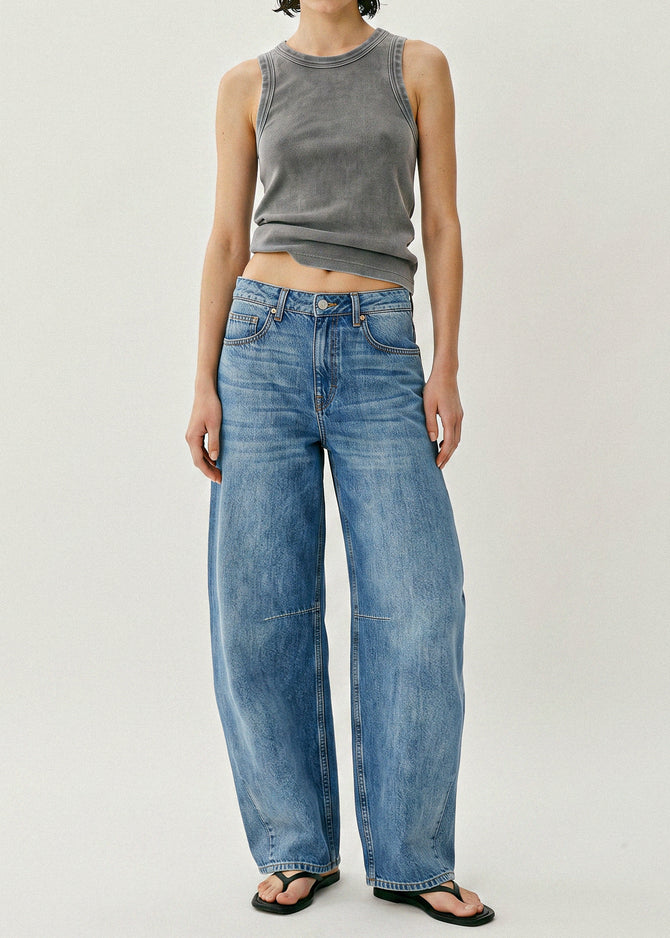
Quality means the garment is well suited to its purpose and consistently made. A structured curved jean, a relaxed straight jean and a stretch slim straight should not feel identical. Each can be well made when its fabric, pattern, stitching and finish support the shape it is supposed to create.
This is why a single shortcut often fails. Heavy denim is not automatically better than light denim. Rigid denim is not automatically better than stretch denim. A dark wash is not automatically more durable than a light one. Quality is the relationship between material, construction, finish and intended use.
Start with the information the brand provides
Read the fiber content
The fiber label tells you what kind of behavior to expect. In the United States, the FTC requires covered textile products to disclose their fiber content and country of origin, while care instructions must give consumers a regular cleaning method supported by the manufacturer.
A 100% cotton label points toward a denim without added elastic fiber, but it does not reveal the fabric weight, weave density or finishing recipe. A small percentage of Lycra or elastane may be intentional when the cut needs mobility and recovery. The label is a starting point, not a quality score.
Look for useful measurements and care guidance
A detailed product page should help you understand rise, inseam and leg opening, and ideally explain how the fit runs. Clear care directions matter because an otherwise strong garment can change prematurely when exposed to a process the fabric was not designed to tolerate.
Inspect the construction, not just the surface
Waistband and fly
The waistband should sit smoothly without twisting, and the fly should lie flat when fastened. Check that belt loops feel firmly anchored and that the button and zipper operate without snagging. A slightly uneven fade is part of many washes; a distorted fly or visibly pulling waistband is a different issue.
Seams and stress points
Follow the side seams and inseams with your eyes. Stitch lines should be secure and appropriate to the construction, with no long loose threads or skipped areas. Look closely where pockets, belt loops and the bottom of the fly meet the body of the jean because these zones receive repeated stress.
Pockets, yoke and symmetry
Back pockets should appear intentionally positioned rather than accidentally mismatched. The yoke should meet the center-back seam cleanly, and the two legs should hang without an unexplained twist. Handmade apparel is not mathematically perfect, but the garment should look balanced when worn.

How can you judge the denim fabric?
Feel for body, not just thickness
Good denim should have enough body for the intended silhouette. A wide or curved leg may benefit from cloth that holds a clear outline, while a slim fit may need controlled flexibility. Fabric that feels substantial can still be unsuitable if it collapses, twists or resists the movement the cut requires.
Denim weight helps explain structure and warmth, but it does not establish quality by itself. Yarn, weave, fiber content, finishing and garment construction also matter. The companion guide What Is Denim Weight and Why Does It Matter? explains how to read that specification.
Check stretch and recovery together
If the jean contains an elastic fiber, gently stretch a small area and release it. The fabric should return rather than remaining visibly bagged after a light test. Do not pull aggressively in a store. For a structured 100% cotton jean, the more relevant questions are whether the cloth supports the silhouette and whether the size allows comfortable movement.
If you are deciding between the two constructions, Rigid vs. Stretch Denim: Which One Should You Buy? separates immediate flexibility from long-term wear behavior.
Does the wash reveal quality?
A good finish should look deliberate and suit the design. On clean dark denim, check that the shade and surface feel consistent with the product description. On faded or distressed denim, look for intentional transitions at seams and raised areas rather than random damage that weakens a stress point.
Wash treatment can soften denim and create highlights. CottonWorks notes that enzyme finishing uses controlled variables including enzyme type, pH, temperature, time, dosage and mechanical action. The presence of a washed effect is therefore not proof of either high or low quality; execution and consistency matter.
Remember that some irregularity is intentional. Slub texture, hand-sanding, whiskering, raw hems and repaired distressing can belong to the design. Compare what you see with the product description before treating variation as a defect.
Try the jeans on and check their balance
Stand, sit and walk
A quality garment still needs to be the right size and shape for you. Fasten the jeans without forcing the waistband, then sit and walk. The fly should remain reasonably flat, the waistband should feel secure, and the seams should not rotate dramatically around the legs.
Look at the full silhouette
Use a front, side and back view. Check whether the hem hangs evenly with the intended shoes, whether the pockets remain balanced and whether the leg shape looks consistent from left to right. Fit tension can create pulling even in well-made jeans, so try another size before concluding that the construction is faulty.

Three NOEND examples of different quality decisions
Structure: Kallie Relaxed Curve in Holland
Kallie Relaxed Curve in Holland uses 100% cotton and shaping darts to create a high-rise, wide curved silhouette. The useful quality question is whether the cloth, knee darts and hem darts work together to hold that intentional shape.
Balance: Selma Loose Straight in Philadelphia
Selma Loose Straight in Philadelphia is a 100% cotton, mid-rise relaxed straight jean made in Los Angeles. Its straightforward construction makes the waistband, fly, yoke, pockets, side seams and cuffed hem easy to assess as a complete system.
Flexibility and finish: Eve in Memphis
Eve High Rise Crop Slim Straight in Memphis combines 99% cotton with 1% Lycra in a stonewashed, distressed slim-straight design. Here, quality should be judged by controlled stretch, recovery, secure distressing and whether the finishing supports the intended modern worn-in look.
These examples are not a ranking. They show why quality must be assessed against the design brief: structure for a curved leg, balance for a loose straight, and measured flexibility for a closer slim straight.
A quick denim-quality checklist
- Confirm the fiber content, care instructions and wash description.
- Check whether the fabric behavior suits the intended silhouette.
- Inspect the waistband, fly, belt loops, seams and stress points.
- Compare front and back pocket placement for intentional balance.
- Look for a controlled finish rather than accidental damage.
- Try the jeans while standing, sitting and walking.
- Use current garment measurements instead of price or marketing language as a shortcut.
Recommended NOEND denim to examine
For a practical comparison, look at the structured Kallie in Holland, the relaxed-straight Selma in Philadelphia and the stretch slim-straight Eve in Memphis. Their different constructions make it easier to see why quality is about fitness for purpose, not one universal fabric rule.
The practical answer
Good denim should communicate what it is, feel appropriate for its cut and show controlled construction throughout the garment. Inspect the label, seams, pockets, hardware, finish and full-body balance together. No single visible feature can promise longevity, but a clear pattern of thoughtful, consistent decisions is a much stronger signal than weight, price or a premium-sounding term alone.
Frequently asked questions
Is heavier denim always higher quality?
No. Heavier denim can feel substantial and hold structure, but yarn quality, weave, finishing, sewing and suitability for the cut also matter. Lightweight denim can be excellent when it is intentionally designed and well constructed.
Does 100% cotton mean the jeans are better?
No. It means the jeans contain no added elastic fiber. That can be ideal for a structured silhouette, while a well-engineered stretch blend may be more appropriate for a close fit that requires recovery.
Are selvedge jeans automatically good quality?
Selvedge describes how the fabric edge was woven. It can be part of a carefully made jean, but it does not by itself guarantee better fit, stitching, finishing or durability.
Can you judge durability in a fitting room?
You can identify useful signals such as secure seams, reinforced stress points and balanced construction, but you cannot fully predict long-term durability from appearance alone. Care, frequency of wear, fit tension and the way the fabric was tested also affect lifespan.
Does “Made in USA” guarantee quality?
No. It is a country-of-origin statement, not a quality grade. Construction, materials, finishing and quality control still need to be assessed separately. Read What Does “Made in USA” Mean for a Pair of Jeans? for the distinction.