


Jeans can feel stiff after air-drying because wet cotton fibers develop connections as they dry, giving the fabric a crisper handle. Detergent residue and water conditions can also contribute. That board-like feeling does not, by itself, mean your jeans have shrunk or been damaged. Start by separating how the fabric feels from how the garment actually fits.
Why cotton can dry with a crisp feel
Cotton does not behave exactly the same way when wet, freshly dried and worn. Research from Kao and Hokkaido University linked hardening after natural drying to water bound at cotton-fiber surfaces, which helps create adhesion between fibers. This is a microscopic process, not a claim that jeans which feel dry are still soaking wet. Kao’s research summary explains the mechanism.
The research offers one explanation for cotton’s changing feel. It does not identify the cause of every stiff pair of jeans. A finished garment also has its own weave, construction and processing history. Two pairs with the same cotton percentage can therefore feel different when you take them off the rack.
Check the kind of stiffness you are noticing
An even, papery feeling
If the legs and waistband feel generally crisp, look at the whole garment before treating one area. Let the jeans finish drying, then handle them gently and try them on. Notice whether you are reacting to the fabric’s resistance to bending, or to a waistband that actually closes differently.
Chalky marks or isolated rough patches
Visible residue changes the question. Check your detergent dose and machine instructions instead of assuming air-drying is the only cause. AEG notes that too much detergent can leave fibers coarse, while too little may be inadequate for the water’s hardness. Heavy, crowded loads can also interfere with satisfactory washing. Its stiff-laundry guidance recommends matching detergent and settings to the load.
Use that as a reason to review the process, not to double the detergent or automatically add another rinse. Follow the product directions, the machine manual and the garment label. A photograph of a pale mark cannot tell you whether it is residue, fading or something else.

Separate stiffness from a change in fit
“These feel tighter” can describe two different experiences. A rigid-feeling leg may resist bending even when the waistband and length seem familiar. A pair that no longer closes comfortably, or sits noticeably higher above your usual shoes, needs a separate fit assessment. Fabric feel alone cannot establish shrinkage.
For a useful comparison, check the jeans when fully dry and wear the same kind of underlayer. Use measurements you recorded earlier, if you have them. Comparing a freshly washed pair with a different size or style adds uncertainty. Avoid pulling hard at a damp waistband to force a result.
Try a quiet reset before another treatment
Once the jeans are dry, open the folded legs and gently flex the cloth in your hands. If the fit is comfortable, normal wear gives you a better sense of the garment than repeatedly squeezing one stiff section. There is no dependable number of minutes in which every pair should become soft.
Keep the goal modest: assess comfort, not make a structured jean behave like jersey. Stop if the fabric, seams or existing distressed details seem to catch. If a persistent rough area feels unpleasant against skin, ask the retailer for advice with the style name and your care history.

Let the label decide what comes next
Heat and additional products are not automatic fixes. Before using an iron, dryer, steamer or softener, check the care instructions for that specific pair. A cotton content listing does not tell you which temperatures or treatments its finish and trims can tolerate.
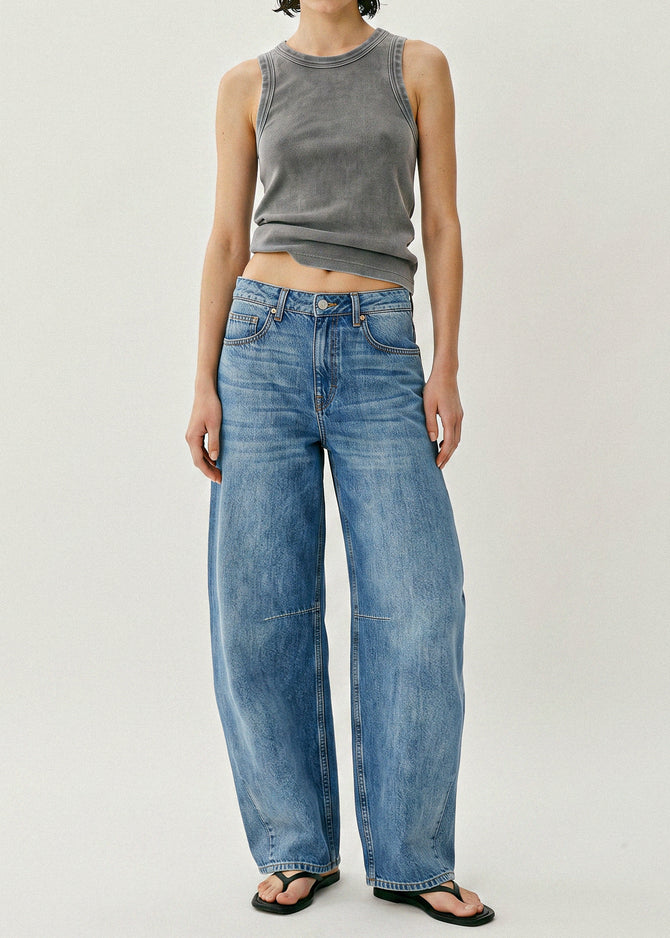
For example, NOEND’s River is listed as 100% cotton, with a high rise and wide-straight silhouette. Those details describe its composition and cut; they do not predict how stiff your individual pair will feel after washing. Keep product facts separate from the outcome of your own laundry routine.
A few common questions
Does stiffness mean my jeans are damaged?
Not on its own. Check for actual changes such as broken stitching, altered measurements or a persistent rough patch. An overall crisp handle is a different observation.
Did air-drying shrink my jeans?
You cannot tell from stiffness alone. Compare the fully dry garment’s fit and measurements with a reliable earlier reference, and review the complete wash-and-dry process.
Do I need fabric softener?
Not automatically. Check the garment label and product directions first. Adding another treatment before identifying the issue makes it harder to know what helped.
Should I put stiff jeans in the dryer?
Only consider that if the care label permits it. The drying method, heat setting and garment instructions matter more than a general promise that tumbling will soften denim.
If you like the feel of cotton denim with a spacious leg, take a closer look at River High Rise Wide Straight in Helena. Choose it for the silhouette and listed fabric, then use its own care label to guide laundry day.