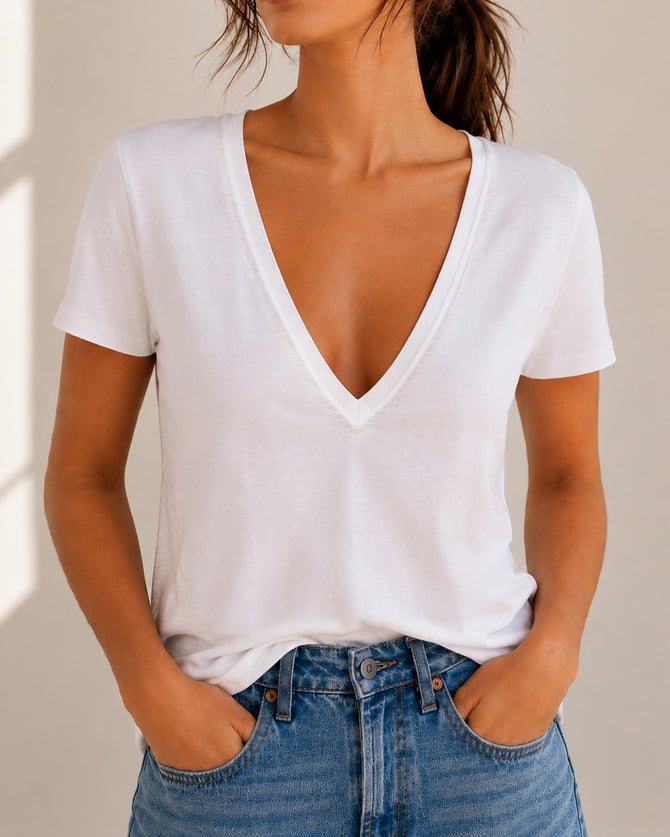
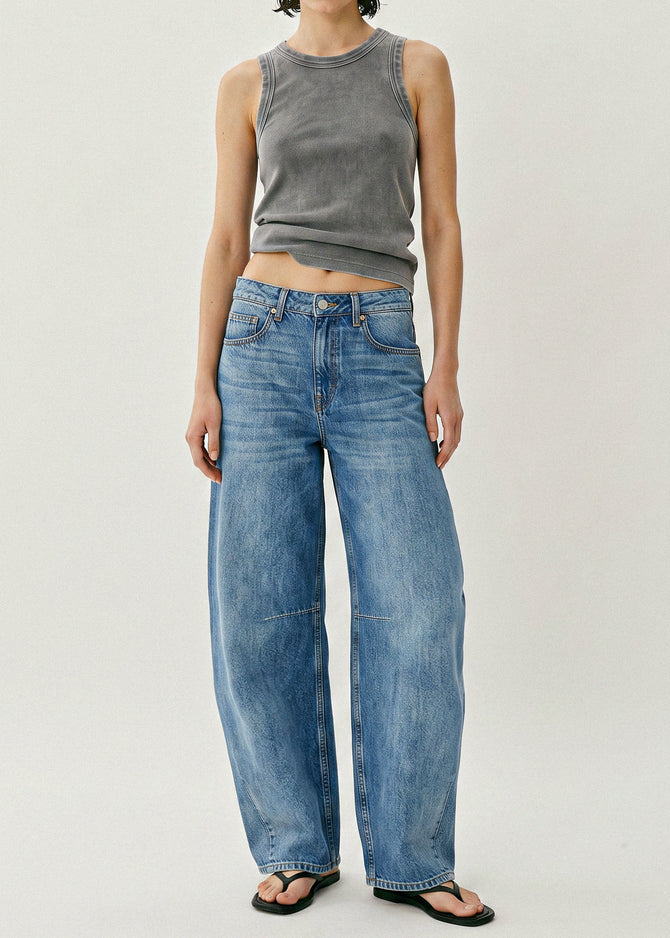


The most flattering jeans are the ones that fit your waist and fullest hip comfortably, then create a balanced line through the leg. Start with rise, seat, leg shape, length, fabric, and the shoes you wear—not a body-shape rule. Straight, flare, wide-leg, and curve cuts can all look flattering when their proportions match your body and outfit.
What does “flattering” mean in jeans?
“Flattering” is not one universal cut or a promise that denim will change your body. In a useful fit sense, it means the jeans sit securely, follow the body where you want support, leave enough room to move, and create a line you like from waist to hem. The same rise or leg shape can look different depending on torso length, hip and thigh measurements, height, and footwear.
Use the word as a shorthand for your priorities. You may want a smooth waistband, more room through the seat, a longer-looking leg line, or a relaxed silhouette that still feels intentional. Those goals can lead to different pairs—and all can be right.
Which fit checks matter most?
Before choosing a style name, check the places where jeans actually need to work:
- Waist: The button should close without forcing the fly to ripple, but the waistband should not gap when you stand naturally. A little room is preferable to a tight band that rolls when you sit.
- Seat and hips: Look for smooth fabric over the fullest point. Horizontal drag lines, pocket flare, or a back yoke that pulls can signal that you need more room or a different cut.
- Thigh: Your legs should move without the inner seam digging in. If the waist fits but the thigh does not, compare the garment measurements before sizing up and creating an oversized waist.
- Rise: The front and back rise should meet your body where you want the waistband to sit. A higher rise can feel supportive, but only if it does not press uncomfortably into your ribs or lower abdomen.
- Movement: Walk, sit, and take a full step. A pair that looks smooth while standing but restricts you is not a flattering fit in real life.
These checks are more reliable than a label such as “curvy,” “straight,” or “hourglass.” Labels can help you narrow the search, but the actual rise, hip, thigh, knee, inseam, and opening measurements tell you more.
How do different leg shapes change the result?
Straight leg
A straight leg keeps a relatively consistent width from the thigh toward the hem. It is a versatile middle ground when you want definition without a close skinny fit or the volume of a wide leg. A clean side seam and a hem that meets your shoe can make the shape feel polished. If the leg is too narrow for your thigh, it will crease and pull; if it is much wider than expected, it may read as relaxed rather than classic straight.
Flare or bootcut
Flare and bootcut jeans are closer through the upper leg before opening at the hem. That change can balance a fitted top or a broader shoulder and can create a continuous line when the inseam reaches the shoe. The trade-off is length: a hem that stops above the shoe may look accidental, while a hem that drags can overwhelm the outfit.
Wide leg
Wide-leg jeans distribute volume from the hip or upper thigh down. They can feel especially flattering when the waist is secure and the leg opening is intentional rather than simply too large. A higher rise with a tucked or cropped top shows where the leg begins; a longer streamlined layer can also work if the silhouette is not swallowed by fabric.
Relaxed curve cuts
A relaxed curve cut is useful when you need room at the hip and seat but do not want to size up the waistband. Look for a shaped pattern, darts, or a curved yoke that follows the body without clinging. The best version still has a clean side seam and enough ease to sit comfortably.

How should rise and length work together?
Rise and inseam create the frame for the whole outfit. A super-high rise can visually place the waist higher and leave more room for a tucked top, but it should still feel comfortable when you bend and sit. A full-length leg can make a wide, flare, or bootcut silhouette feel deliberate; the right hem is the one that meets your chosen shoe without twisting or pooling heavily.
Try jeans with the footwear you actually wear. Pointed shoes can echo a longer direction, while sneakers need enough hem clearance to avoid a bulky stack. If a pair is right everywhere except length, tailoring is usually a better solution than changing sizes.
Does fabric change what looks flattering?
Yes. Rigid denim can hold a clear line and soften with wear, while stretch denim may feel easier immediately and follow the body more closely. Neither is automatically more flattering. With 100% cotton jeans, allow room for movement at the seat and thigh rather than buying a painfully tight size in the hope that it will “mold” perfectly. With stretch, avoid a waistband that is already loose because it may relax further.
Check the fabric content alongside the measurements. Two pairs marked the same size can have very different hip, thigh, and opening measurements because of their pattern and cloth.
How do wash and details affect the silhouette?
Wash and construction change where the eye pauses. An even wash and long, uninterrupted panels can make a relaxed leg feel clean. Strong whiskering, contrast patches, large back pockets, or horizontal distressing draw attention to specific areas. That is not inherently bad; it is simply part of the design. Choose details that support the effect you want rather than assuming darker always means better.
Pocket placement is worth checking from the back. Pockets that sit smoothly and proportionately can make the seat look intentional, while pockets that gape or sit too low may make the jeans feel off even when the front fits.
How should tops and shoes be chosen?
Start with the jeans’ volume. A fitted or neatly tucked top lets a high rise and a wide or flare leg read clearly. A cropped jacket can repeat the waistband line. A long coat or blazer can also work when it is streamlined and leaves some waist or leg visible through the opening. The goal is balance, not a fixed formula.
For shoes, match the hem to the sole and the occasion. A low-profile sneaker keeps a straight leg casual; a pointed flat, boot, or heel supports a longer flare or wide leg. Stand in profile to make sure the hem is not catching under the heel or creating a thick ridge across the toe.

Recommended NOEND Denim options
Sophia Super High Rise Wide Leg in Vista is a useful reference for the high-rise, full-volume approach. The current product page lists a super-high rise of approximately 13 inches, a 31.5-inch inseam, a 23.5-inch knee, and a 27-inch opening in 100% cotton denim. It is designed with a light blue faded wash, welt pocket detail, and a raw hem, and the page says it fits true to size. Because the leg is intentionally full, confirm the inseam against your shoes.
Kallie Relaxed Curve in Mocha is the alternative when the priority is more room through the hip and seat. Its current page lists a 12.5-inch front rise, 30-inch inseam, 24.25-inch knee, and 19.5-inch opening in structured 100% cotton denim. Subtle darts shape the seat and hem, while the relaxed curve fit is intended to give ease without requiring a larger waistband. Treat both descriptions and availability as current product-page information that can change.
What should you check in the fitting room?
- Measure or review the garment’s waist, hip, rise, thigh, inseam, and opening before comparing size numbers.
- Fasten the waistband and check it standing, seated, and slightly bent. It should stay secure without rolling or cutting in.
- Look at the side seam. It should fall down the leg rather than twisting toward the front or back.
- Walk, sit, and take a full step. Check for drag lines at the hip and thigh.
- Try the jeans with your real shoes, then inspect the hem from front, side, and back.
- Check pockets, whiskering, seams, and distressing for placement you genuinely like.
- If only the length is wrong, ask whether a simple hem adjustment will solve it before abandoning the fit.
Questions about the most flattering jeans for women
Are high-rise jeans always the most flattering?
No. A high rise can support a tucked look and make the leg start higher, but the most flattering rise is the one that sits comfortably on your torso and works with your proportions.
Can wide-leg jeans be flattering?
Yes. A secure waist, enough hip ease, intentional volume, and a controlled hem make wide-leg jeans look balanced. The shoe and top proportions matter as much as the leg opening.
Should flattering jeans fit tightly?
No. They should be secure at the waist and smooth where you want structure, while still allowing you to sit, walk, and move. Tightness alone is not a measure of fit.
What if my usual size fits my waist but not my hips?
Compare the hip and thigh measurements of another cut, try a curve or relaxed pattern, or have the waist tailored after choosing a pair that fits the fullest point. Sizing up is not the only option.
Bottom line: The most flattering jeans are the ones whose measurements, fabric, leg shape, hem, and styling agree with your body and routine. For two different starting points, compare Sophia Super High Rise Wide Leg in Vista with Kallie Relaxed Curve in Mocha and judge the fit by movement as well as the mirror.