
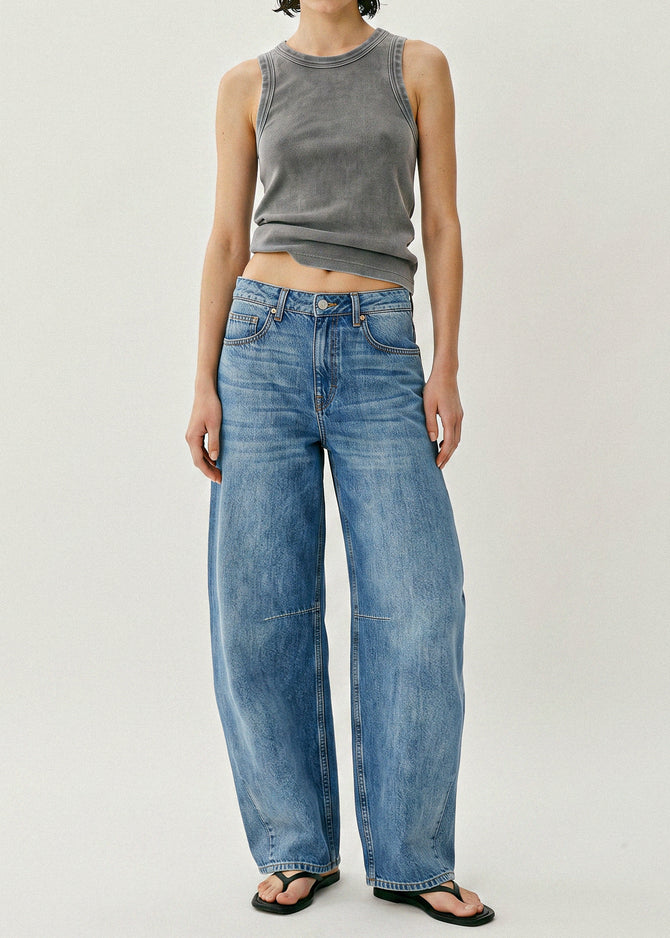


A familiar pair of jeans, a measuring tape, and the product page are more useful than the size number alone.
To buy jeans online without trying them on, measure a pair you already like and compare garment measurements—not only the labeled size. Check the waist, rise, hip, thigh, inseam, and leg opening; then account for fabric composition and intended silhouette. Read the fit notes, model information, and return policy before ordering, and judge the hem against the shoes you plan to wear.
What should you measure before ordering jeans online?
Start with jeans that fit the way you want the new pair to fit. A slim ankle jean is a useful reference for another slim ankle jean; it is less useful for judging a loose curve leg. Lay the jeans flat without stretching the fabric, smooth the waistband, and use the same measuring points listed on the product page.
Waist and front rise
Measure straight across the inside of the waistband, then double that number only if the brand presents a full waist circumference. For the front rise, measure from the crotch seam to the top edge of the front waistband. Rise determines where the waistband sits, so two pairs with a similar waist can feel very different if one lands higher on the torso.
Hip and thigh
The hip is usually measured across the garment at a set distance below the waistband, but brands do not always use the same point. Follow the diagram or instructions on the size chart whenever one is provided. For the thigh, measure from just below the crotch across the leg. This number matters especially when a straight or fitted style looks roomy on a model but may fit closer on you.
Inseam and leg opening
Measure the inseam from the crotch seam to the hem along the inside leg. Then measure straight across the bottom opening. Inseam tells you where the hem may land; leg opening tells you how the jean will interact with loafers, sneakers, ankle boots, or a taller boot shaft.

How do you compare your measurements to a jeans size chart?
First identify whether the chart lists body measurements or finished garment measurements. Body measurements describe you; garment measurements describe the jeans. They are not interchangeable because a garment may include ease, stretch, or a deliberately relaxed shape.
If the product page gives garment measurements, compare them directly with your reference jeans. If it gives body measurements, measure your body in close-fitting clothing and keep the tape level without pulling it tight. When your numbers cross two sizes, prioritize the area that is hardest to alter or least likely to relax. For rigid denim, that is often the hip or thigh; for a very relaxed fit, the waistband may be the more useful anchor.
Do not assume the same numeric size will fit identically across brands—or even across different silhouettes from one brand. A size is a starting point. The measurement method, fabric, rise, and design intent explain what that size will actually feel like.
Why do fabric and silhouette change the answer?
Rigid denim holds its architecture
Jeans made from 100% cotton generally feel more structured than denim with stretch fiber. They can ease with wear in high-movement areas, but they do not behave like elastic fabric and may tighten again after washing. When buying rigid denim online, give extra attention to the hip and thigh measurements and to any note describing the fit as slim, relaxed, or oversized.
Stretch denim follows the body more closely
A small amount of stretch can make a closer cut more forgiving, but composition alone does not predict fit. The weight of the fabric, weave, pattern, and recovery all matter. Use the fiber content to interpret the size chart, not to replace it.
The intended shape matters as much as the measurements
A curved leg needs room through the leg to create its shape. A loose straight jean should fall with ease rather than mimic a slim straight. A mini-boot jean is designed to sit closer through the hip and thigh before opening subtly at the ankle. The product name, description, and full-length photographs should all point to the same silhouette.
How do rise and inseam affect online fit?
Rise is not simply a styling label. A mid-rise and high-rise jean can have the same stated waist size while sitting on different parts of the body. Compare the listed front rise with a pair you own, then note where that waistband lands on you.
For length, consider both your inseam and the intended break. An ankle jean should reveal the shoe rather than stack heavily. A full-length straight or curved jean may skim the shoe or form a small break. If the model is taller or shorter than you, compare the model's listed height and jean size with the stated inseam instead of judging the image alone.
What can model photos and fit notes actually tell you?
Model photos are best for reading proportion: where the waistband lands, how much ease appears through the seat and thigh, and where the hem meets the shoe. They are less reliable for predicting your size unless the model's height, measurements, and worn size are included.
Fit notes are often more useful. “True to size” means the brand recommends beginning with your usual size for that particular design—not that every body will experience the fit identically. “Runs slightly large” or “size down for a tailored fit” describes a style-specific choice. Treat those notes as context alongside the measurements, never as a universal rule to size up or down.
What should you check before placing the order?
- Confirm that the chart refers to the exact style, not a general brand chart.
- Read the fiber content and care instructions.
- Look at front, side, and back views whenever available.
- Check whether the model's height and worn size are listed.
- Review shipping, return, exchange, and final-sale terms before checkout.
- Save your measurements and the size you ordered for future comparison.
If you are still uncertain, contact customer care with your reference-jean measurements and the fit you want. “I prefer a relaxed thigh and a clean full-length hem” is more actionable than asking whether a style runs big.

Three NOEND fits that show why details matter
A structured curve leg
The Kallie Relaxed Curve in Mocha is a high-rise, 100% cotton jean with a relaxed curved leg and shaping darts at the knee and hem. Its 12.5-inch front rise and 30-inch inseam help explain the proportion before you order. The product page describes it as true to size, but the rigid fabric and sculpted leg make comparison with a similarly relaxed pair especially useful.
A loose straight with deliberate ease
The Selma Loose Straight in Philadelphia is a mid-rise, 100% cotton style with a relaxed hip and thigh, straight leg, and cuffed raw-edge ankle. Its fit note says it runs slightly large and suggests sizing down for a more tailored fit. That distinction matters: choose based on whether you want the intended looseness or a cleaner, closer line.
A closer mini-boot shape with stretch
The Carla Mid Rise Ankle Mini Boot in Oklahoma uses 99% cotton and 1% Lycra for a closer fit through the hip and thigh with a gentle ankle flare. The 9.5-inch rise and 27.5-inch inseam indicate a lower landing point and cropped proportion compared with the other two styles. Its true-to-size note is most useful when read together with those measurements and the fabric composition.
The most reliable online-jeans method
Keep a simple note on your phone with the measurements of two pairs you own: one fitted and one relaxed. Record the brand, style, size, fabric, and how each pair feels after several hours of wear. That small reference library makes future product pages easier to decode and helps you shop by actual fit rather than by a familiar number.
When you are ready to compare silhouettes, browse the NOEND denim collection and open each product page side by side. The goal is not to find one “correct” size in every jean; it is to match the measurements, material, and intended shape to the way you want the pair to fit.
Frequently asked questions
Should I buy the same jeans size from every brand?
No. Size labels are not standardized enough to replace a style-specific chart. Compare measurements and fit notes each time, particularly when switching between rigid and stretch denim.
Should I measure my body or a pair of jeans?
Use the method that matches the chart. Compare body measurements with a body-size chart and garment measurements with a garment-size chart. When possible, a well-fitting pair is the clearest reference for the finished fit you prefer.
What should I do if I am between sizes?
Consider the fabric and intended silhouette, then prioritize the measurement that needs the right amount of room. Read the style's specific fit note and avoid applying a blanket rule to always size up or down.
Is rigid or stretch denim easier to buy online?
Neither is automatically easier. Stretch can allow more tolerance in a close fit, while rigid denim often makes the silhouette easier to read. Accurate measurements and clear fit notes matter more than the category alone.